
When it comes to men’s fashion, we often hear the term boutonnière. However, it’s sometimes confused with other elements of a jacket, which, in the world of classic menswear, is a faux pas best avoided. If we want to match garments properly and build well-composed outfits, our style vocabulary needs to be well-developed. So let’s take a closer look at this elegant little detail!
Pocket square vs. boutonnière
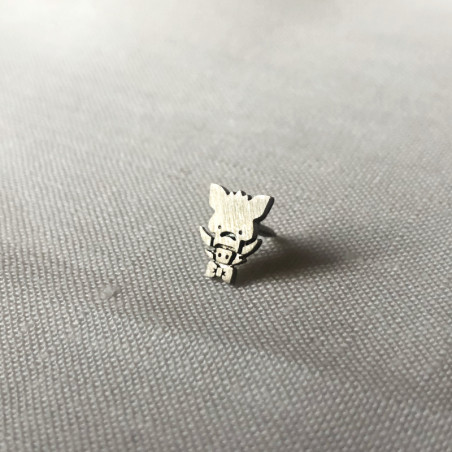
The boutonnière is often confused with the pocket square. This is a serious mistake! These two elements have nothing in common. A pocket square is a small piece of fabric — typically linen or silk — that is placed in the breast pocket of a jacket. The boutonnière, on the other hand, is a small slit on the left lapel of the jacket, often finished with a decorative stitch.
Breast pocket vs. boutonnière
These are another pair of commonly confused terms. Even though they start with the same letter, they refer to two completely different things! The breast pocket is the chest pocket located on the left side of a jacket. That’s exactly where we place the previously mentioned pocket square.
Boutonnière for a suit
Since the boutonnière is an important element of every suit, it’s worth getting to know it a bit better — and that means taking a brief look at its history. The word comes from the French boutonnière (bouton in French means “button”). It’s worth noting that jackets were once fastened with buttons high up to the neck. As fashion trends evolved and lapels were lowered, the upper button disappeared — leaving behind a slit in the lapel. Since the 19th century, this space has traditionally held a flower, which became a symbol of the elegant and distinguished gentleman. As a fun fact: in certain historical periods, the type of flower worn in the boutonnière conveyed symbolic meanings, allowing people to “speak without words.” It’s no surprise, then, that the boutonnière is often associated with romantic occasions — especially weddings.
Boutonnière for a jacket
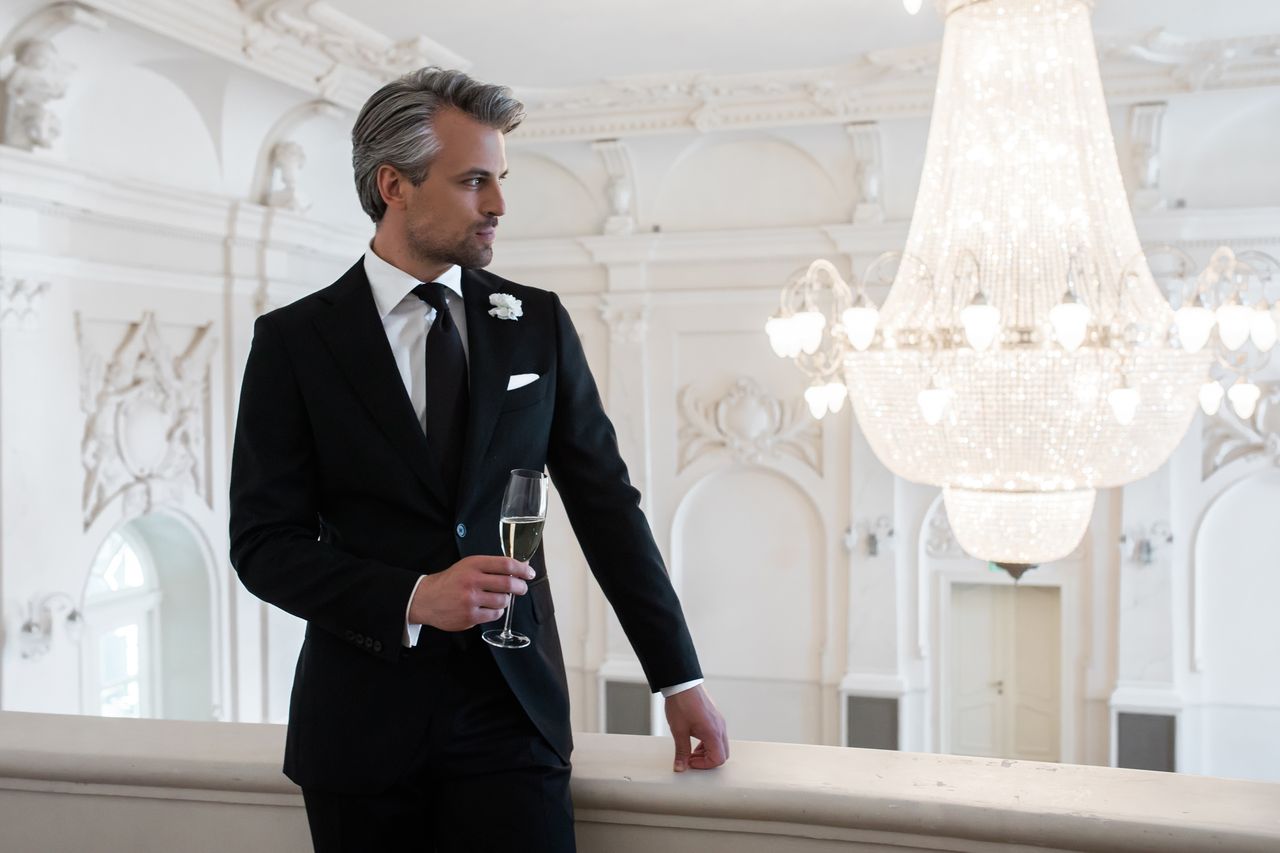
A flower placed in the boutonnière is most commonly associated with the image of a wedding. Traditionally, the flower chosen for the ceremony is white — and that’s exactly how it should be. It is meant to symbolically echo the bride’s white wedding dress, not — as some mistakenly believe — match the bouquet. It’s also worth noting that flowers intended for decorative use in the boutonnière should be stored in a cool place. A florist preparing them for you will usually treat them with a special floral preservative to help maintain freshness. Before inserting the flower into the lapel slit, make sure to dry it off gently — after all, no one wants a damp stain on their suit jacket!
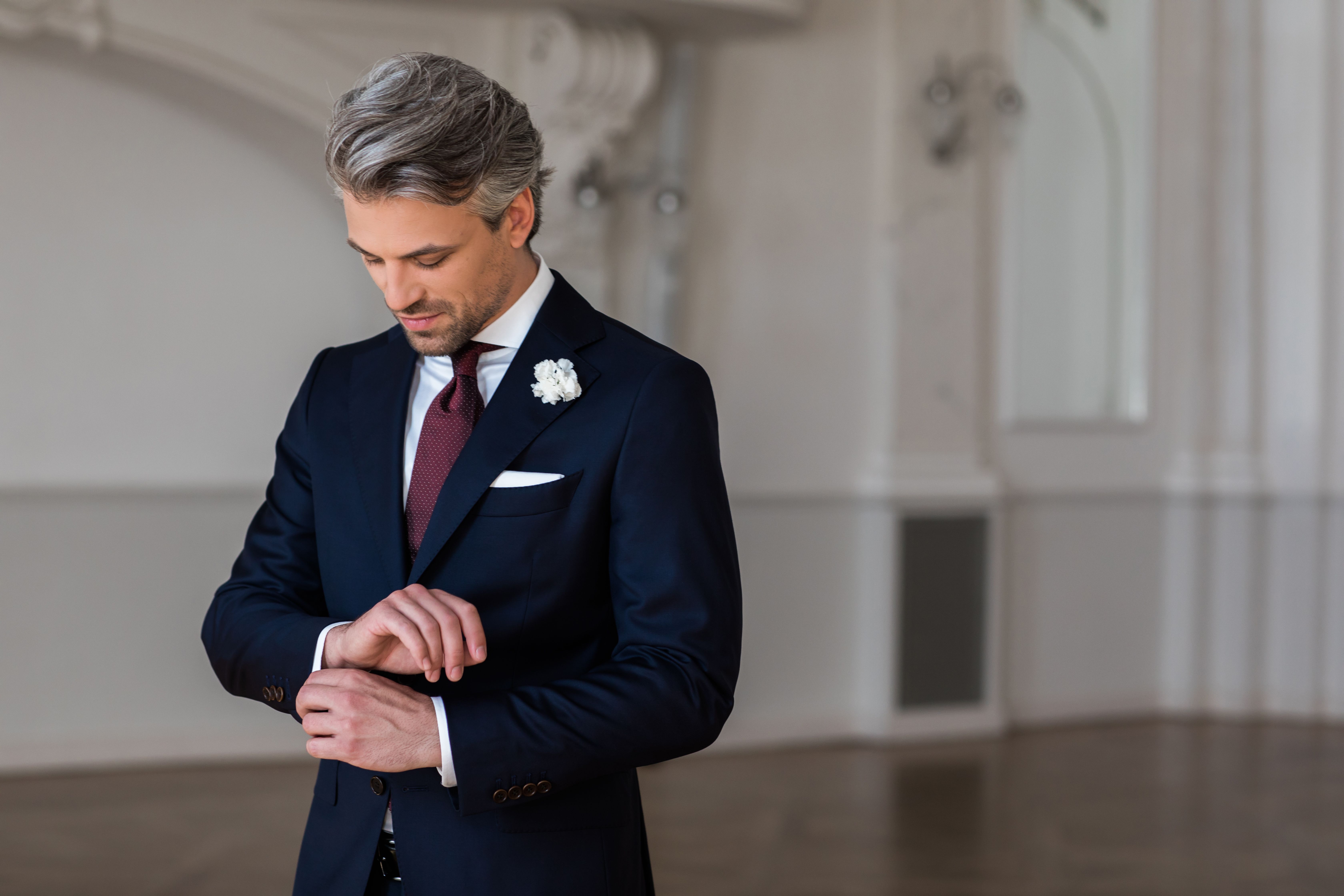
An adorned boutonnière isn’t reserved for weddings alone — it’s also a great idea for more “everyday” occasions. For example, you can incorporate this detail into coordinated outfits. And flowers aren’t the only option! Well-chosen jewelry pieces can also be worn in the boutonnière, adding a touch of elegance and allowing you to express your identity or affiliation, especially in business or formal networking settings. In our store, you’ll find a silver lapel pin featuring a wild boar:
Until now, affiliation with the "Klika Dzika" group could be expressed through the club bow tie and necktie. At last, we’ve managed to get our hands on silver boar pins — and we’re absolutely thrilled with them! The lapel pin featuring the group’s logo is small (9x7 mm), making it discreet and refined. It perfectly embodies the principles of classic men’s elegance, which remind us that true style never shouts. The little boar is made of 925 sterling silver and weighs 0.49 g (with the clasp, 1.05 g — the clasp itself is not silver). The pins were created based on a 3D print of the group’s logo design, followed by a lost-wax casting process and finished with magnetic polishing. 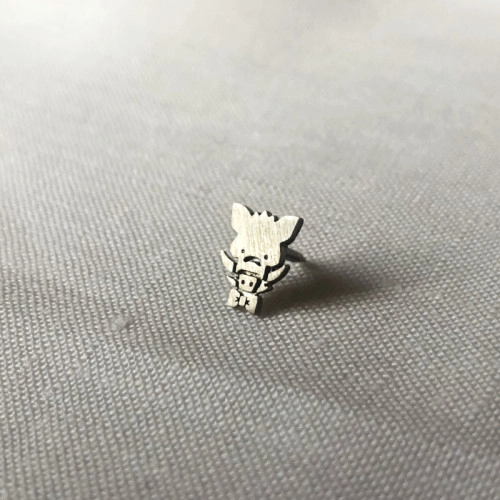
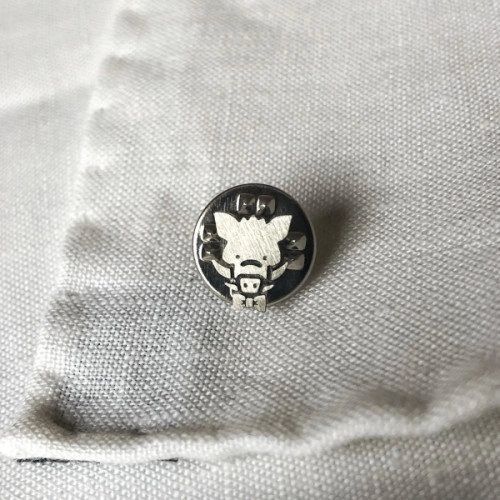
Silver lapel pin "Klika Dzika"
Comments (2)
-
W końcu mogłam mojemu mężczyźnie pokazać różnicę;)
-
WITAM, DZIEKUJE ZA CIEKAWA LEKCJE. POZDRAWIAM