

A jacket is one of the most elegant pieces in a man’s wardrobe. A well-fitted jacket guarantees a polished appearance. However, it’s worth understanding how this garment is constructed to confidently combine it with the other elements of your outfit. Let’s get started!
How is a men’s jacket constructed?
What are the key elements of a jacket?

Lapels
The lapels have a significant impact on the character of a jacket. They also play an important role in choosing the right cut of jacket for a particular body type. There are three types of lapels:
Notch lapels are the most popular type and are favored by many. They feature a small triangular cutout where the lapel meets the collar, with a fairly wide angle (up to 90 degrees). A jacket with this type of lapel is highly versatile—you can wear it both to work and for an evening out. This option suits men of all body types but works especially well for those with slimmer figures.
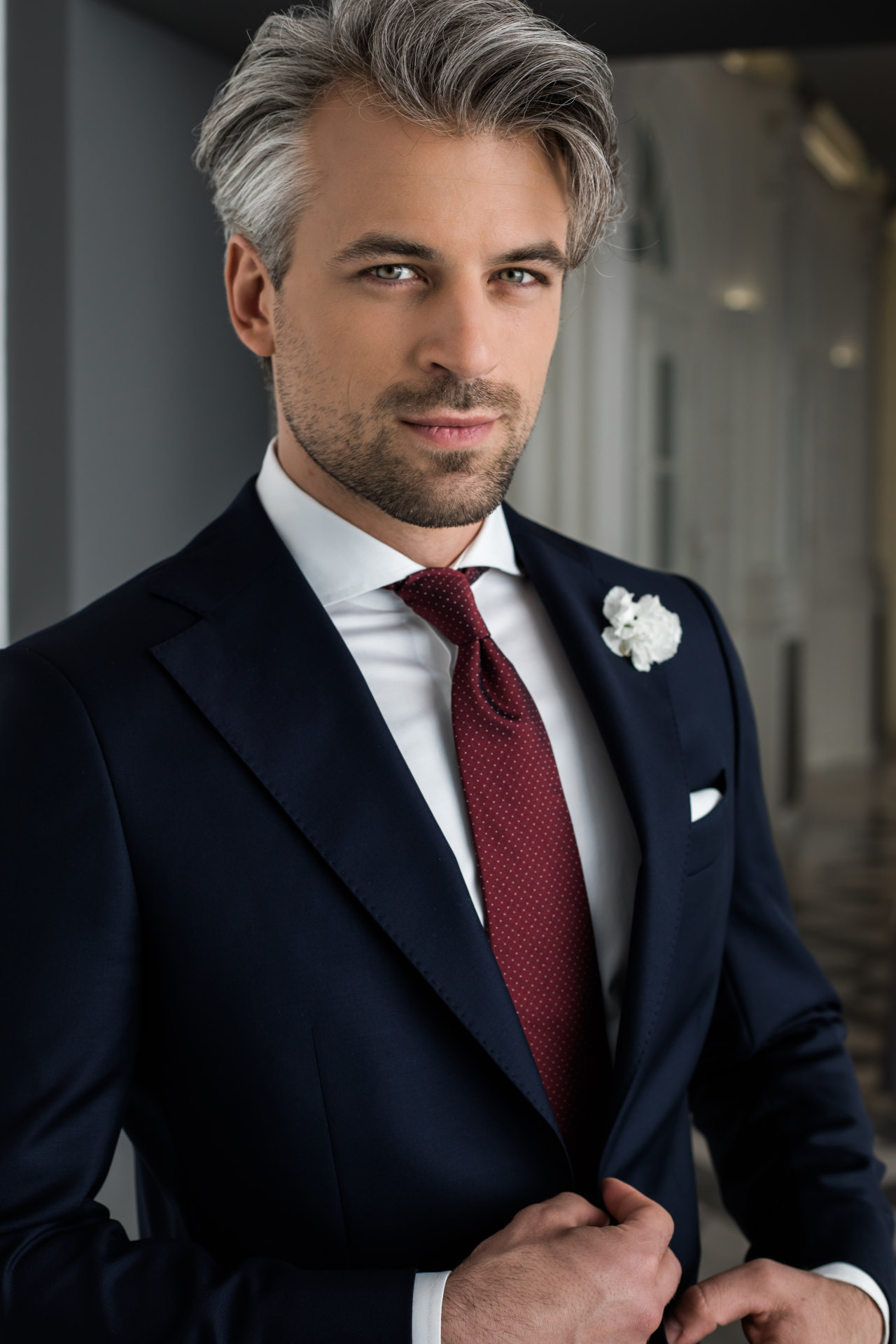
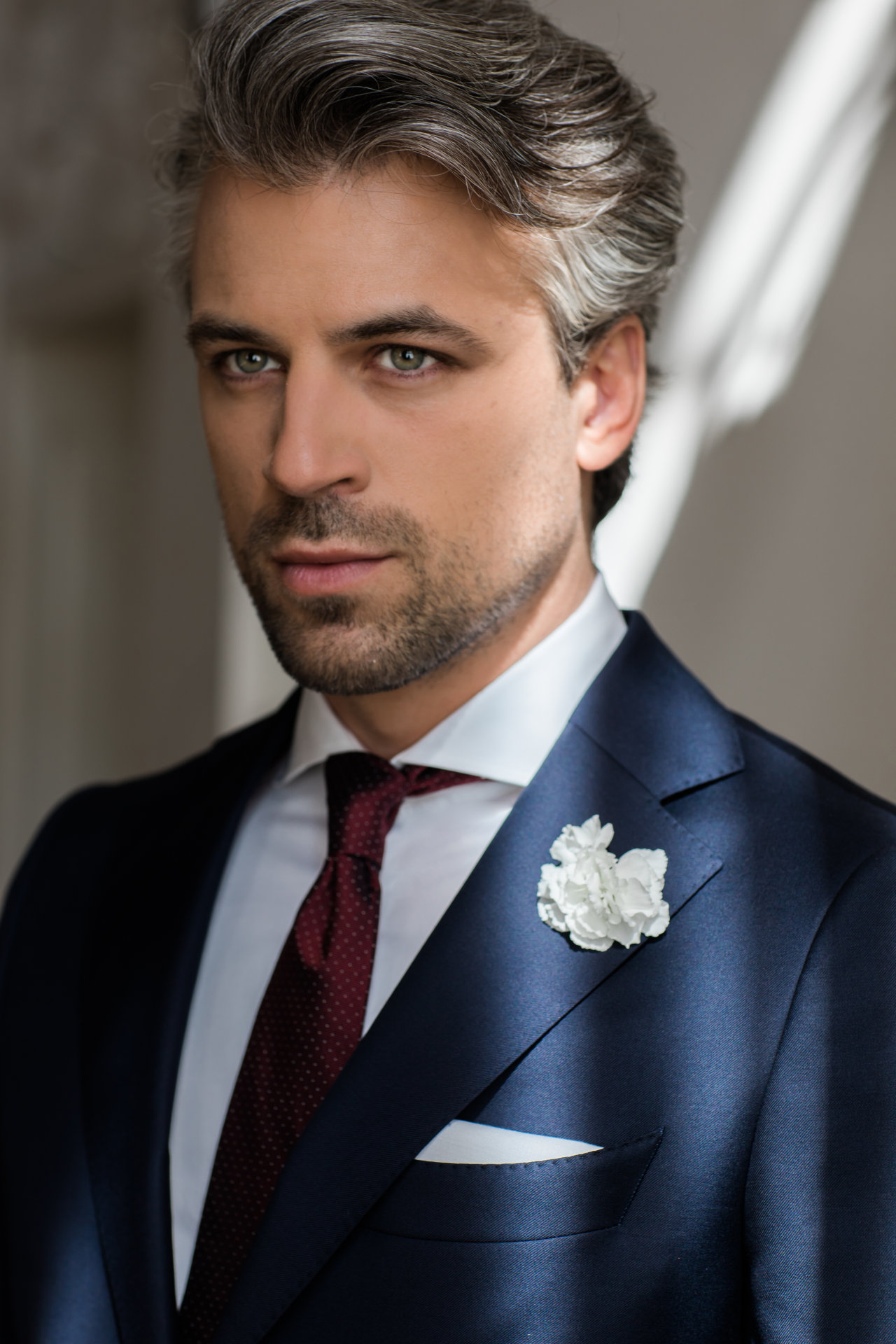
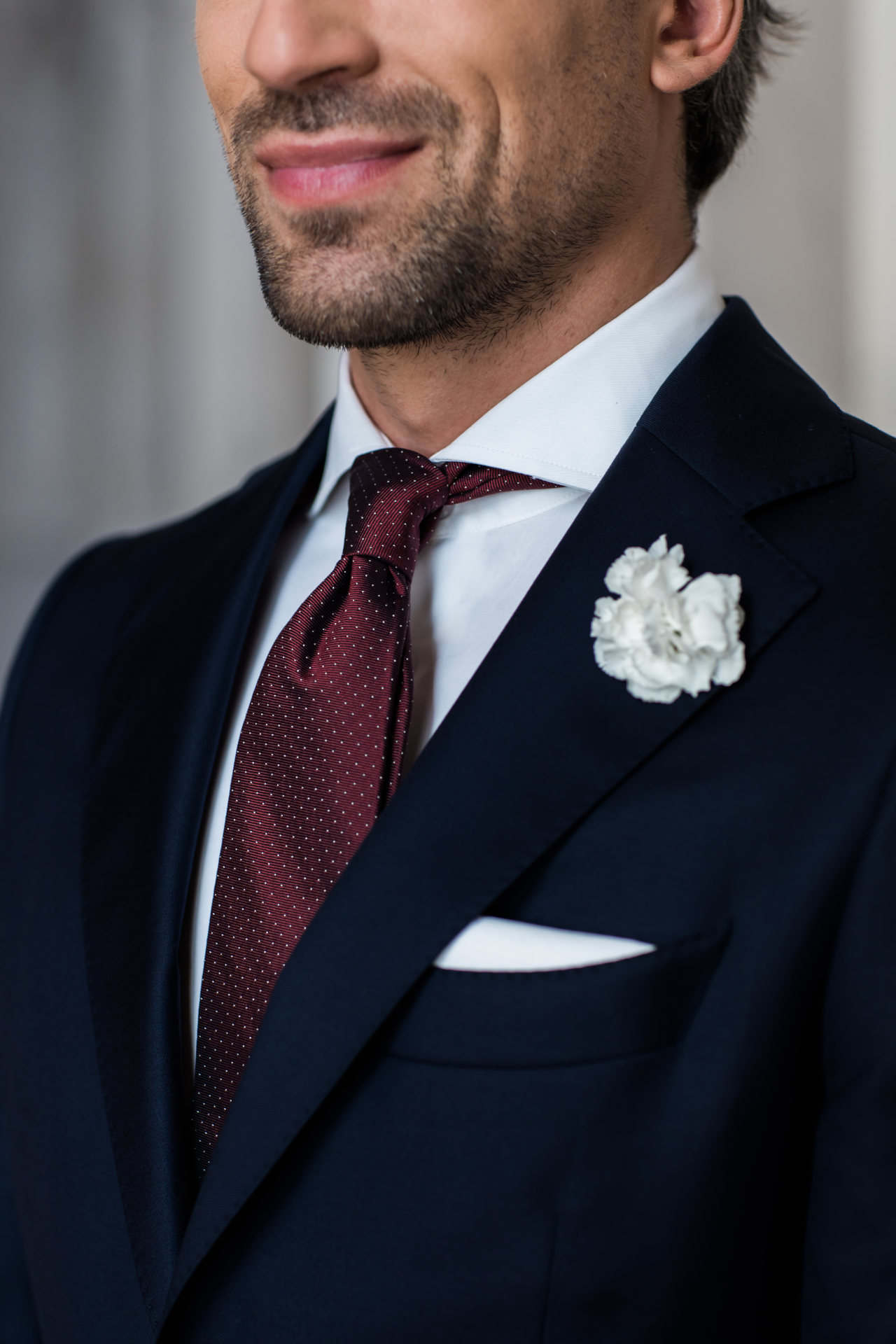
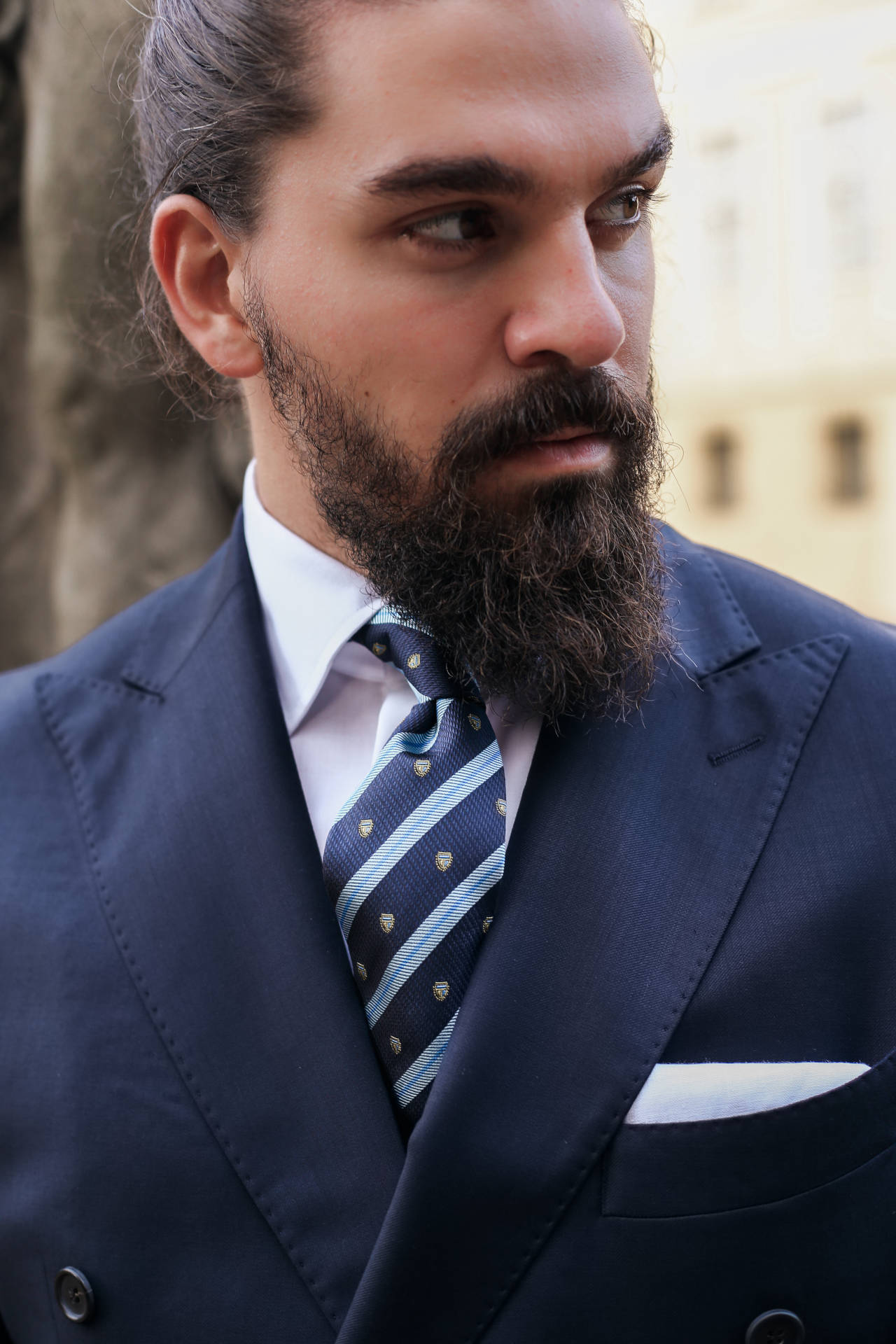
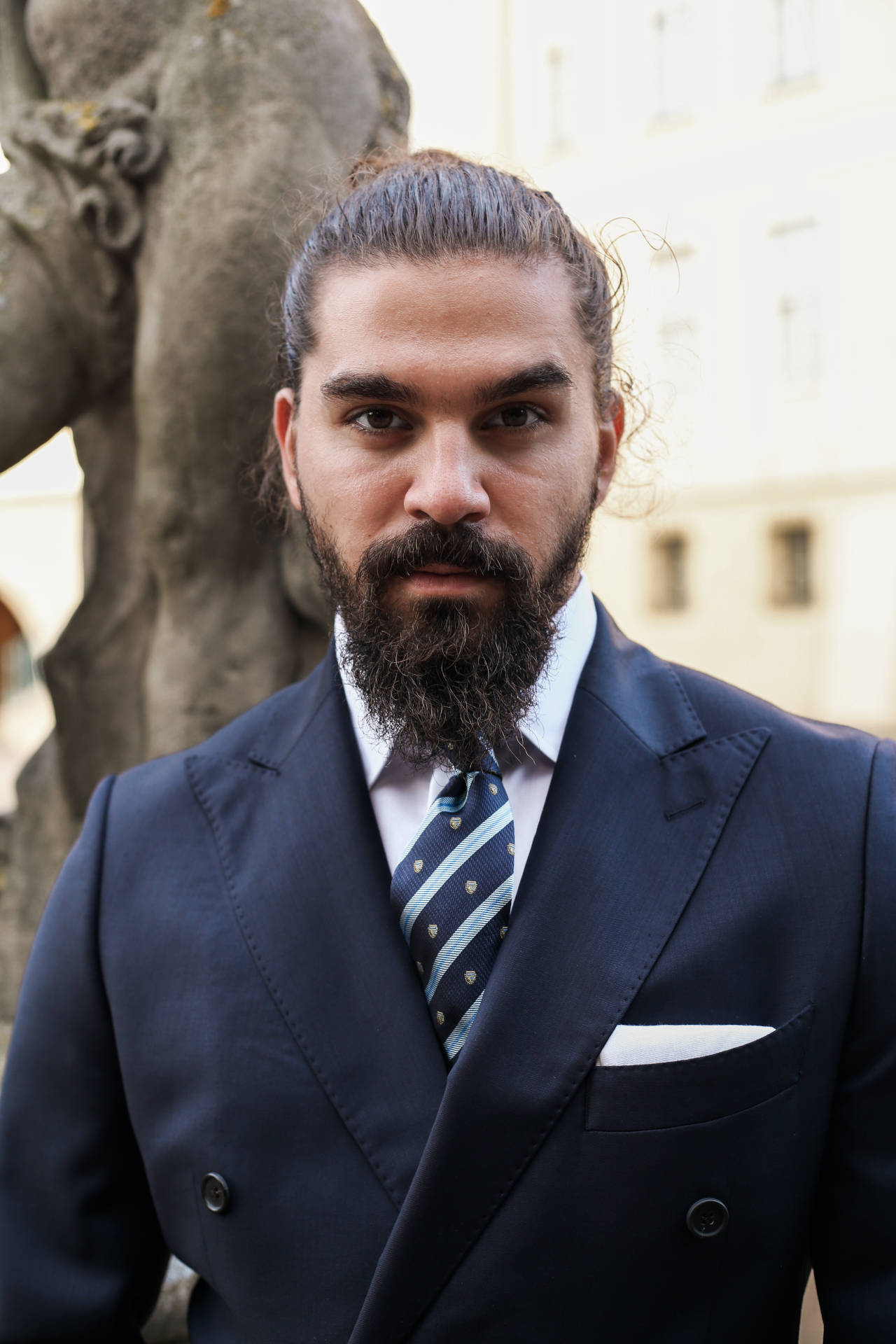
Peak lapels, also known as tuxedo lapels. As the name suggests, they originate from the tailcoat and are considered slightly more formal—they are most commonly found on double-breasted jackets. For this reason, they are best suited to more formal occasions. While all gentlemen can wear them, they are especially recommended for men with a larger build, as they have a visually slimming effect.

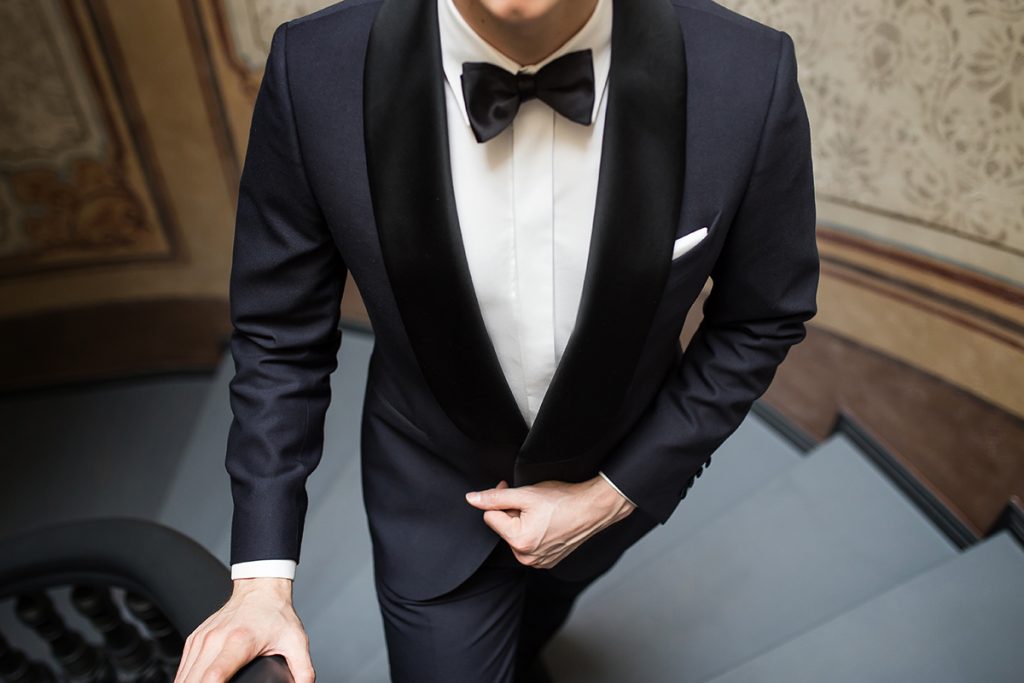
Shawl lapels have a rounded shape, resembling a scarf—hence the name. They are perfect for formal occasions, such as weddings. A jacket with this type of lapel can be worn by any gentleman, though it tends to look particularly elegant on slimmer men.
Breast pocket
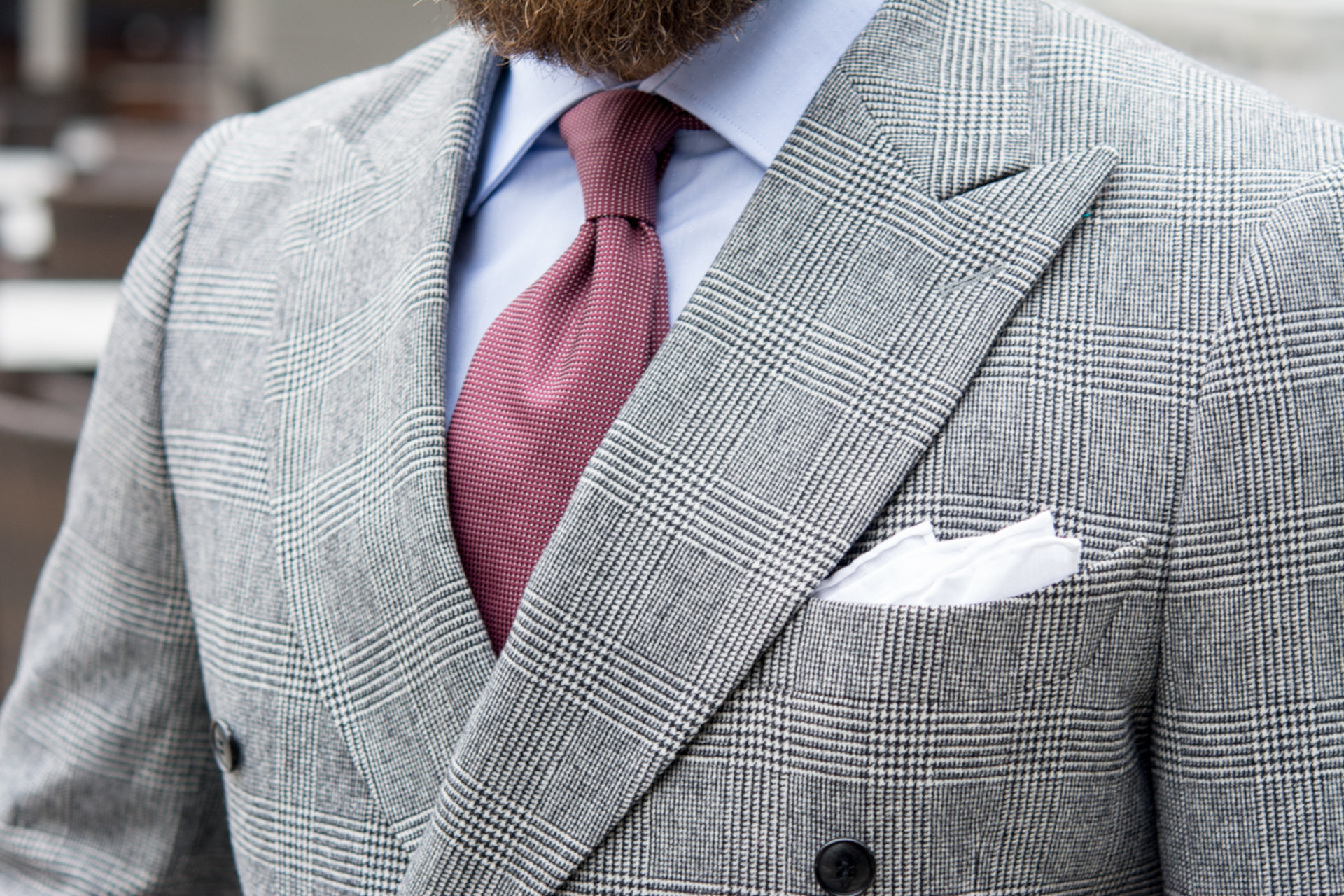
The breast pocket is a small pocket located on the chest of a jacket. It’s designed to hold an elegant pocket square or another decorative accessory. Its name is often confused with the boutonnière. Breast pockets come in various shapes, though the most common has a straight edge. You can also find patch breast pockets and the so-called barchetta style, which has a boat-like curved shape.
Boutonnière
The boutonnière is a small slit on a jacket’s lapel. Originally, it was a practical feature, but over the years it has become purely an aesthetic detail. In the past, a button was placed near this slit because jackets used to be fastened all the way up to the neck. Today, the buttonhole serves as a place to hold a flower—such as a carnation—during important occasions.
Pockets
Jackets also feature hip pockets, and their shape plays an important role in giving the garment its distinctive character. The most common type is the jetted pocket—a universal yet highly formal option. A jetted pocket set at an angle is slightly less formal. In sport jackets, you’ll also find patch pockets, which lend a more casual feel to the jacket.
.JPG)
Vents
Vents are simply the slits at the back of a jacket. Originally, they allowed gentlemen to ride horses more comfortably. Today, you can find jackets with no vents, a single vent, or double vents. Evening suits typically have no vents, day suits most often feature double vents, and sport jackets usually come with a single vent.
Buttons
Buttons are an important detail and can be arranged in either a single or double row. So-called single-breasted jackets are more popular, but double-breasted jackets are an incredibly elegant option with their own dedicated following. The most common style is a single-breasted jacket with two buttons. A single button is borrowed from tuxedo design, while jackets with three buttons are rare. Double-breasted jackets typically feature four or six buttons; however, only certain buttons are meant to be fastened.


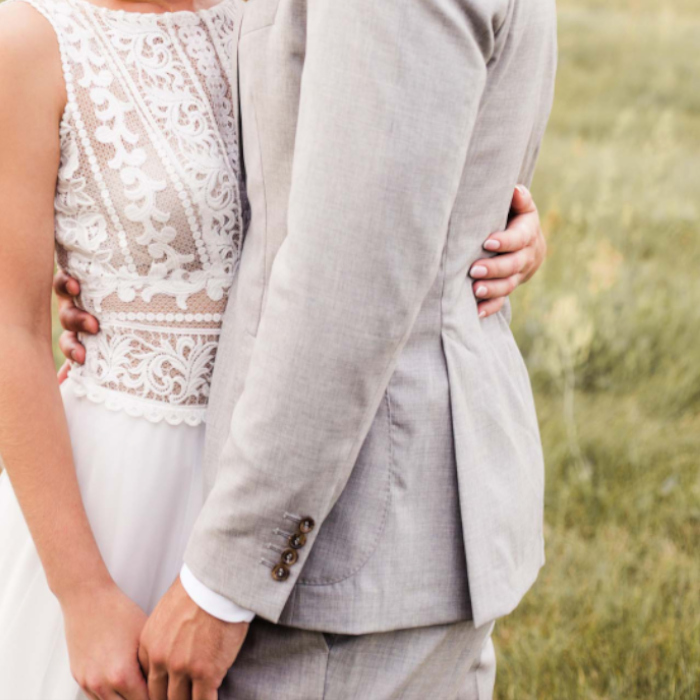
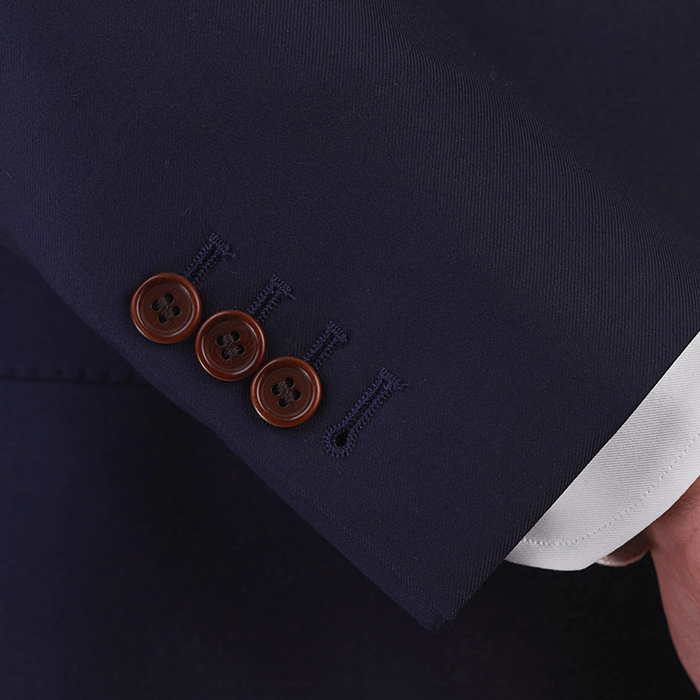
You’ll also find buttons on the sleeves: they can be functional, but in some jacket models, they are purely decorative.
Now you know the key elements of a jacket and what defines them. We hope that choosing the perfect jacket for you will now be much easier!
Comments (0)