

Many men dream of a perfectly fitted, well-tailored shirt that looks great not only before the first wash, but every time thereafter. Men’s shirts currently available on the market vary greatly in price, and not everyone can assess their quality. The source of these differences is usually unclear to buyers. We have spent a great deal of time analyzing the shirt production process. Thanks to this, we can easily recognize high-quality shirts.
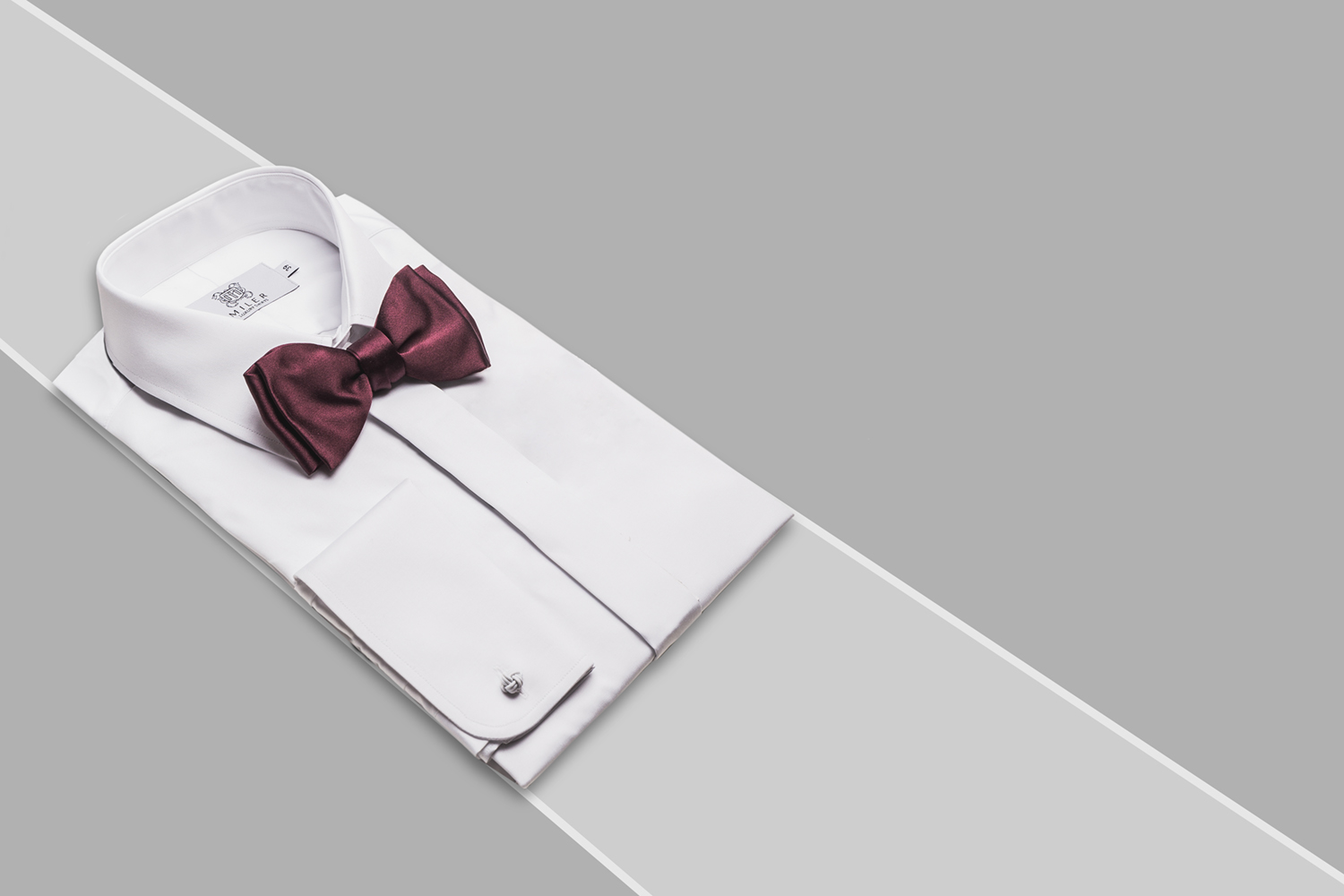
To best illustrate what a high-quality shirt looks like, we compared it with a shirt from one of the retail stores.
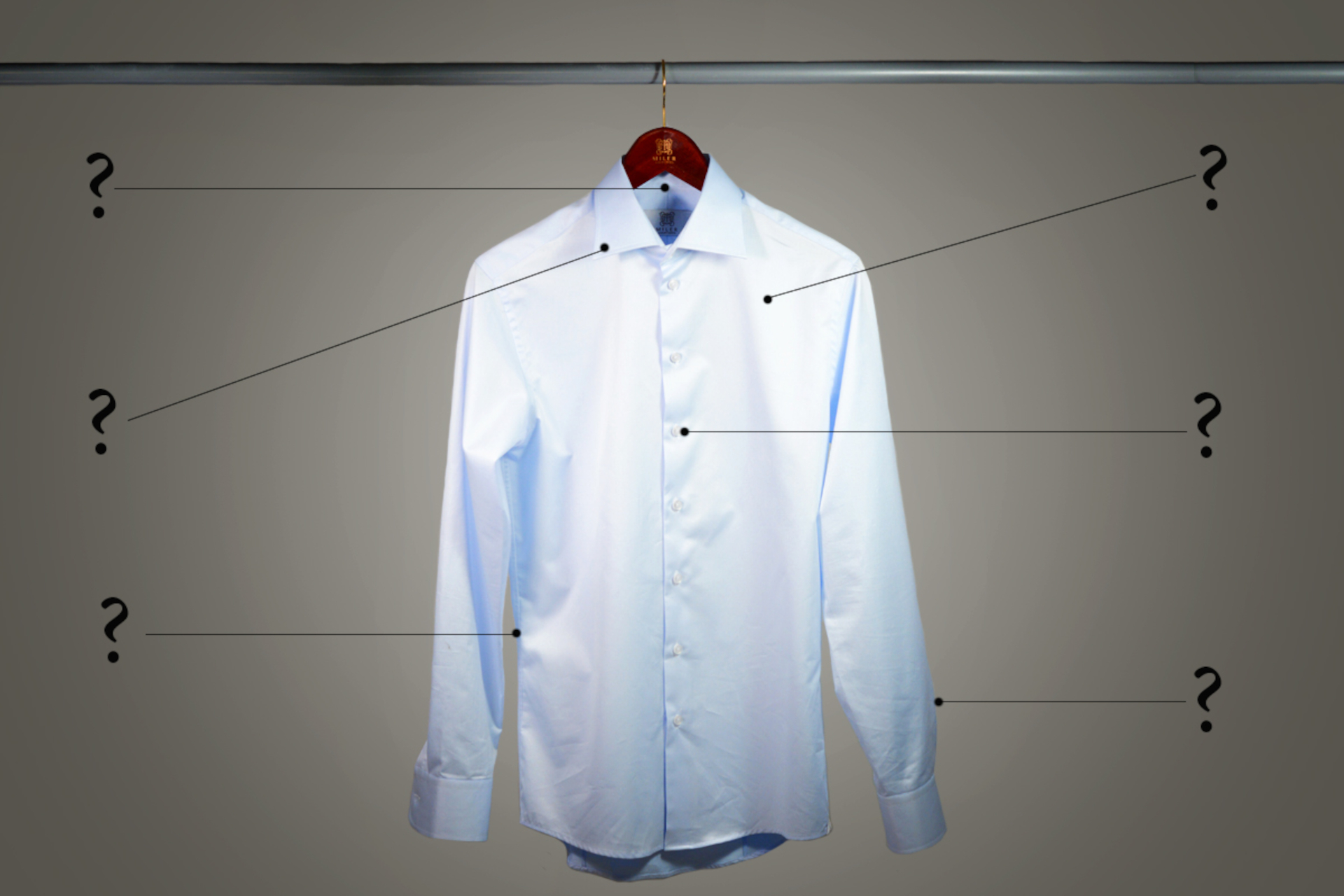
In a good men’s shirt, the quality of workmanship is expressed through certain elements that a knowledgeable consumer can easily assess. It’s worth knowing these elements to ensure you’re paying for quality, not just the brand. Here are the most important hallmarks of shirt quality.
Fabric – the key to assessing the quality of a men’s shirt
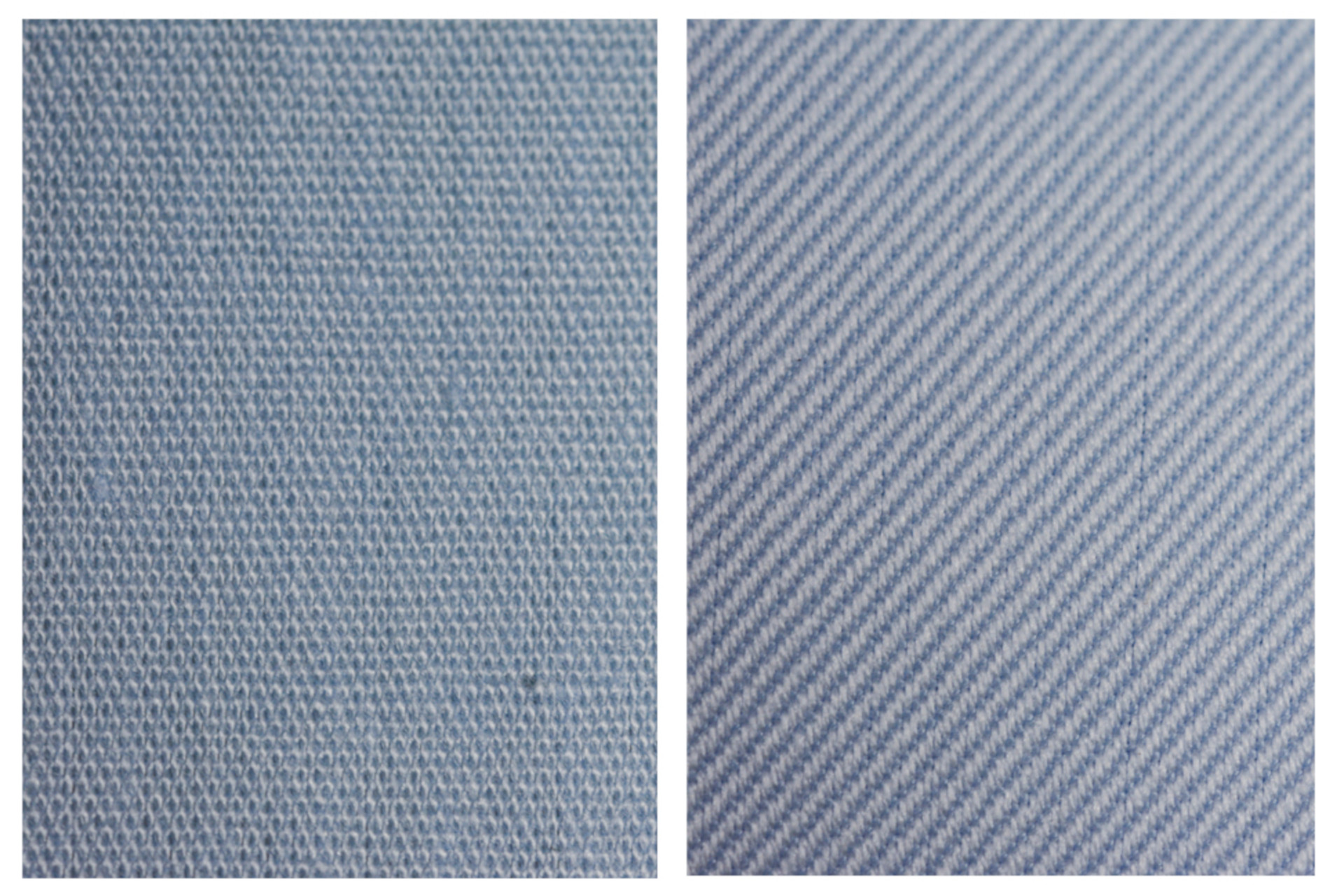
The highest-quality cotton fabrics usually come from Italy or Switzerland and are characterized by an excellent feel and finish, meaning they are substantial yet soft to the touch. Of course, the most important indicator of fabric quality is its longevity, which unfortunately can only be assessed after several washes. In the photos below, I present unwashed fabrics from a supermarket shirt (weave: poplin) and from a shirt made of top-grade Italian cotton (weave: twill). Both photos were taken under the same lighting conditions.
Stitch density and sewing precision help assess a shirt’s quality
One of the technological indicators of men’s shirt quality, which is relatively easy to verify, is stitch density. High-quality shirts have between six and nine stitches per 1 cm of seam, whereas the cheapest shirts have only four or five stitches. Stitch density is most noticeable on the topstitching of the collar. Nothing beats the visual appeal of dense, even stitching. It’s worth paying attention to this, as the topstitching is located right next to the wearer’s face.
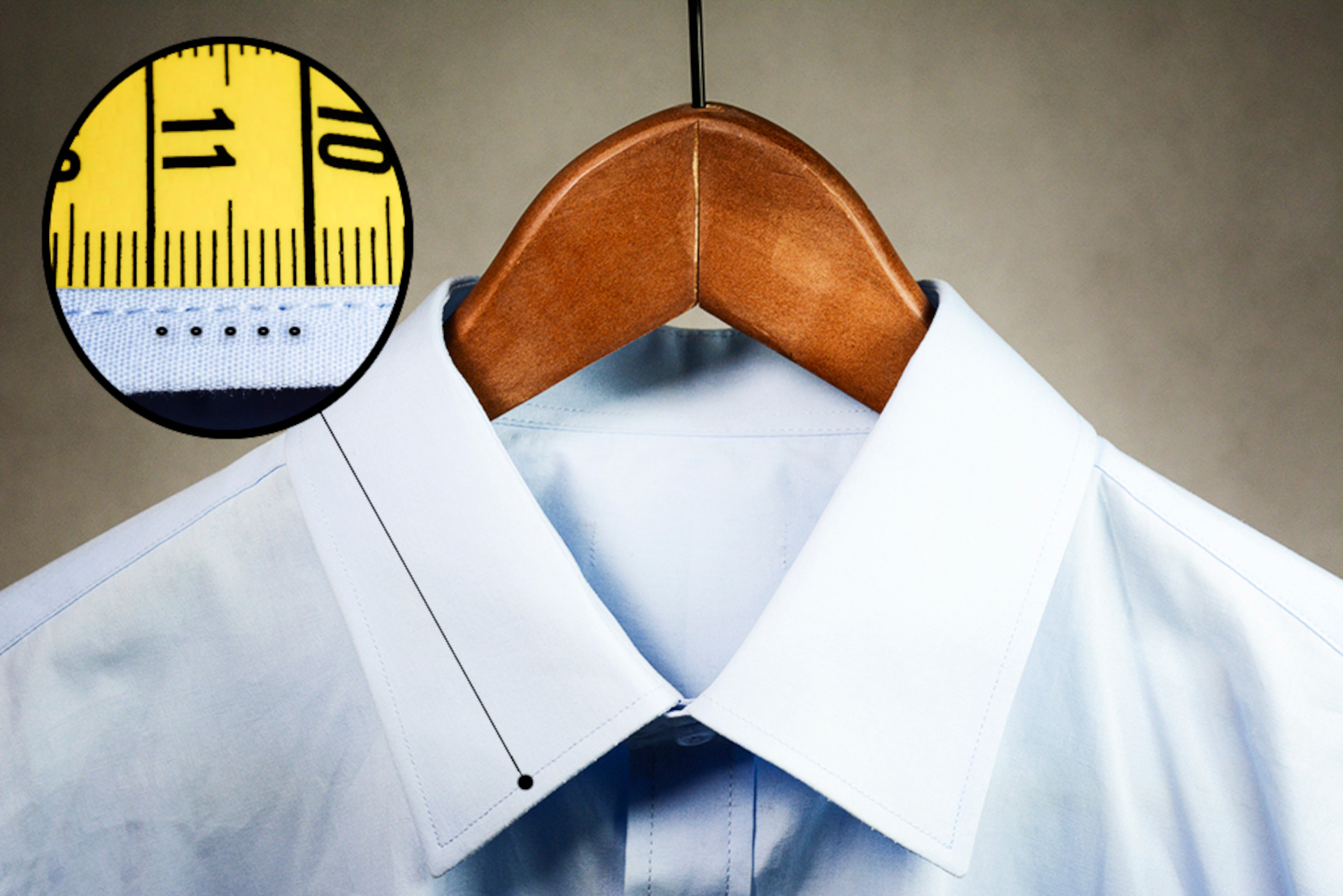
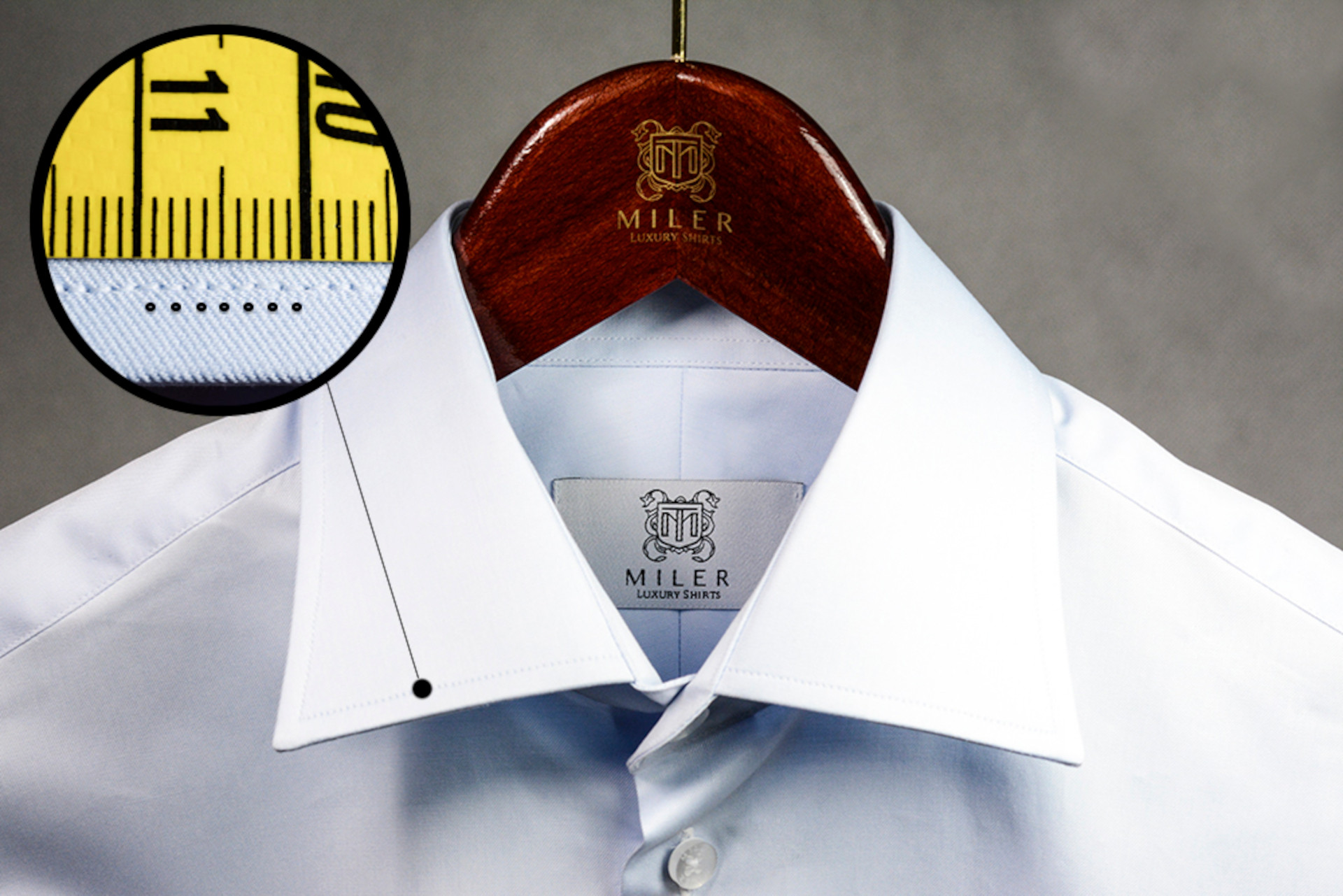
It’s worth adding that in the case of standardized clothing, sewn according to a specific sizing chart, precision is crucial. This is why men’s shirts from large sewing factories are distinguished by the highest quality of workmanship. Usually, one worker performs no more than four production operations. This means that if someone sews collars, they do it so well that learning this from scratch would take many months.
Collar stay pockets
Sewing collar stay pockets requires fairly complex production steps, but it offers the advantage of allowing the collar stays to be replaced or removed during washing. Cheap men’s shirts have collar stays sewn in permanently, which carries the risk of, for example, a collar stay breaking and deforming the collar.
.jpg)
.jpg)
French seams
For finishing garments that have direct contact with the body, a French seam is used. Its function is to prevent the skin from coming into contact with the unpleasant-feeling raw edges of the fabric. The French seam is also referred to as a double-stitched seam because its construction requires sewing each join twice.
Of course, two production operations multiplied by production scale generate noticeably higher costs, which naturally must be reflected in the price of the shirt. In cheap shirts, all long seams are finished with the cheapest stitch called overlock, which uses multiple threads at once to finish the inside of the shirt in a single sewing operation.
.jpg)
.jpg)
Split yoke
Another element indicating the quality of a men’s shirt is the split yoke, visible on the back just below the neck. A yoke constructed in this way allows the shoulder line to be cut along the fabric’s warp rather than on the bias, which prevents the shirt’s shoulders from stretching. Until recently, the split yoke was a feature found only in bespoke shirts.
Sleeve placket
One of the details that significantly improves the functionality of a shirt is a buttonhole sewn perpendicular to fasten the sleeve placket. Admittedly, sewing it this way requires greater precision and attention, but it eliminates the inconvenience of having to ask someone else for help in buttoning the shirt, as fastening the sleeve placket with one hand becomes no problem at all.
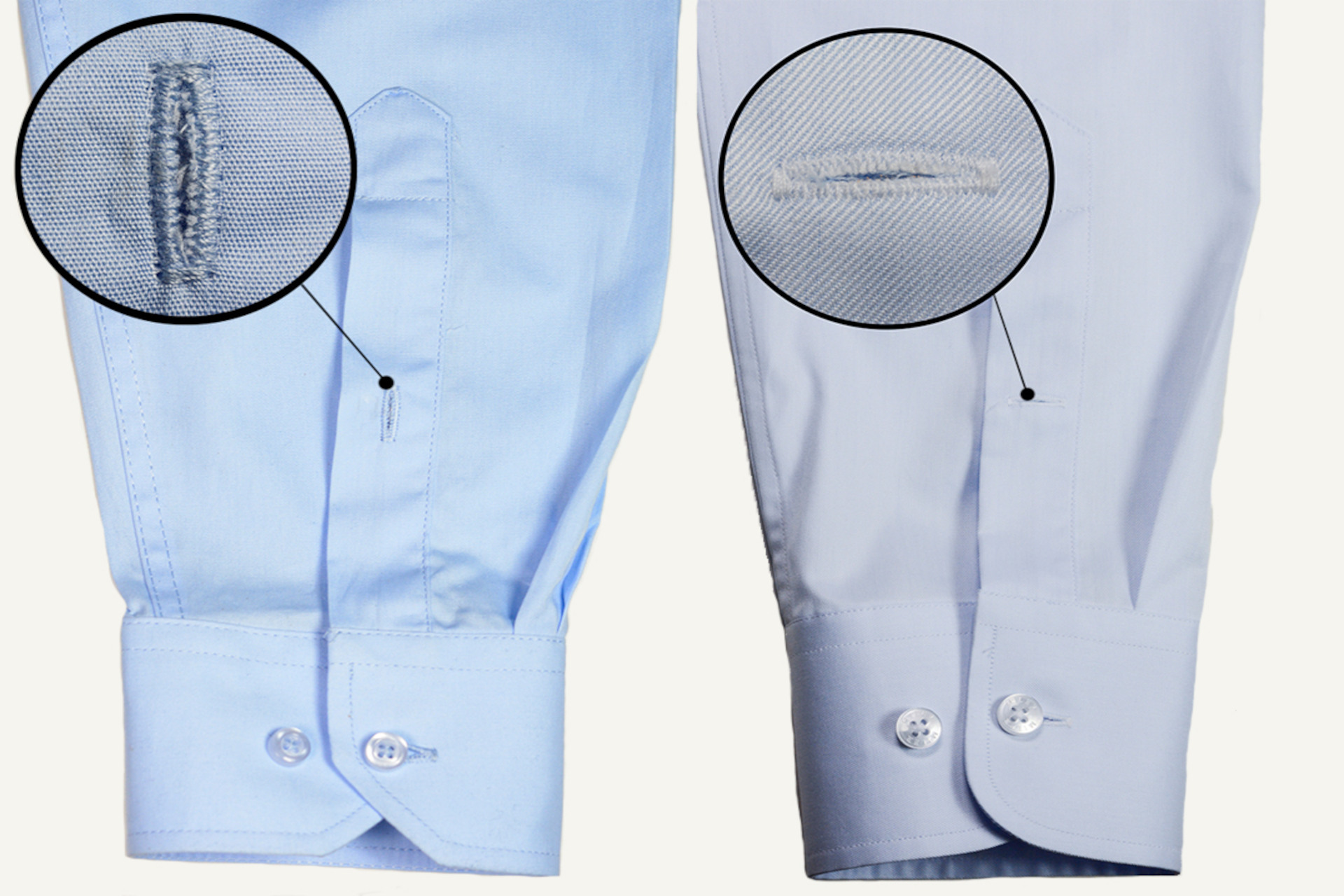
Button sewing
When a men’s shirt is already sewn, specialized machines attach the buttons. In the highest-quality shirts, these buttons are additionally secured using the Swiss Ascolite technology. This method uses an elastic thread that is wrapped around the cotton thread connecting the button to the shirt, creating a neat stem.
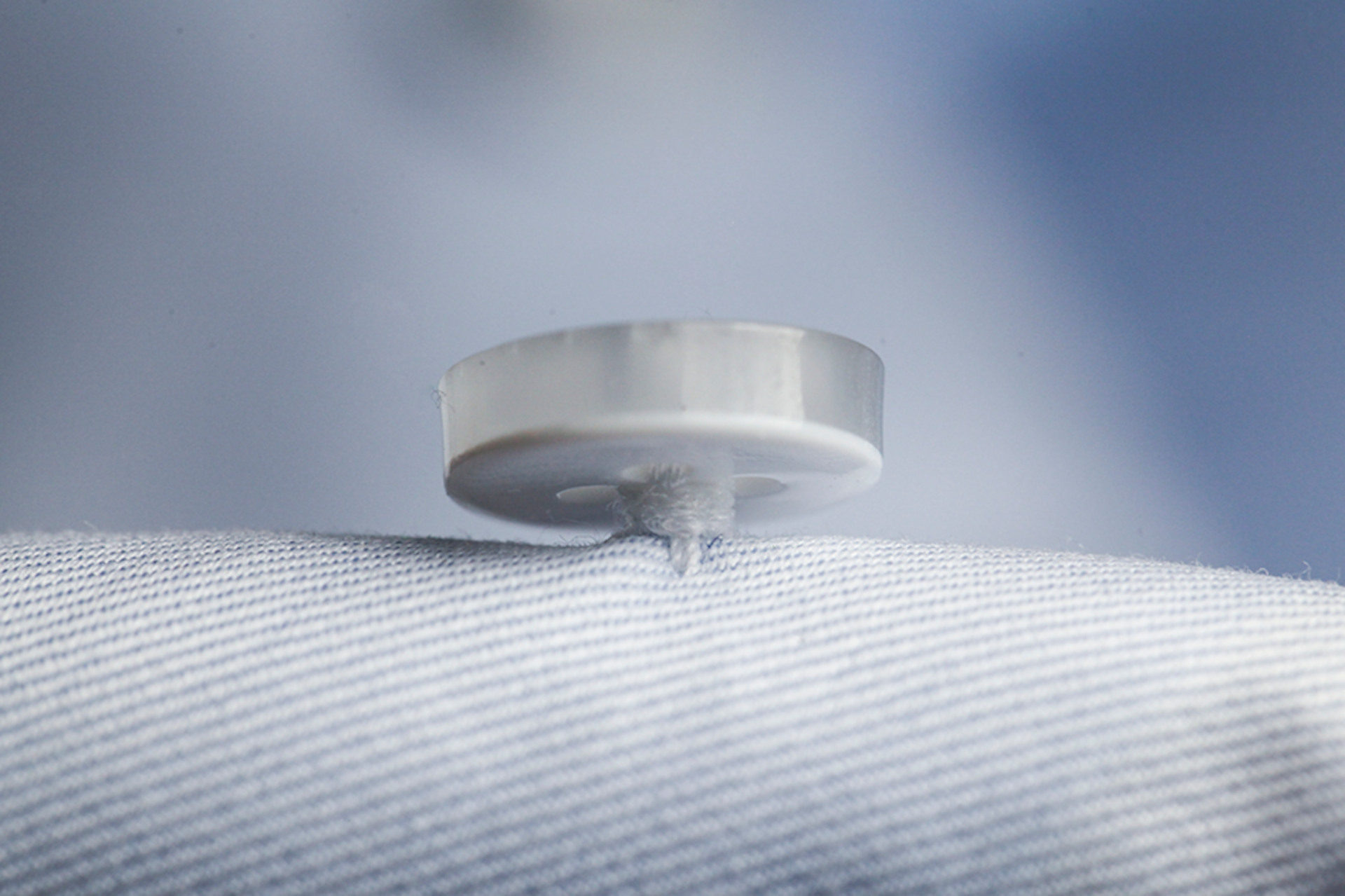
The Ascolite elastic thread is heat-sealable, so its end leaves no loose thread and prevents the button from coming off on its own. This gives the wearer a guarantee of security and a perfect appearance in every situation.
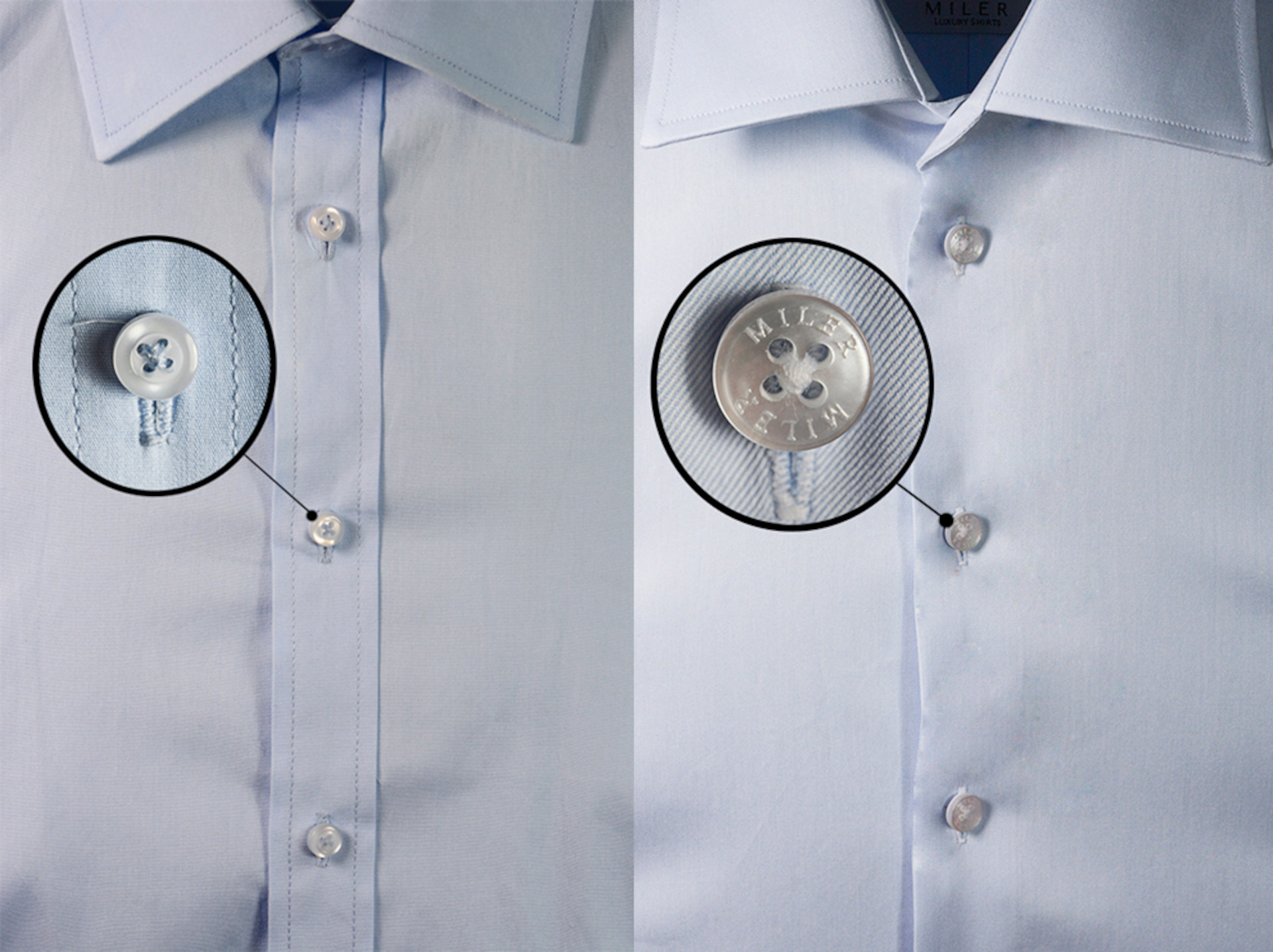
Shirts by Miler Menswear
With great pride, we present the Miler Menswear shirt collection, the result of our search for true quality. We had three guiding principles:
I. A completely classic cut – no gimmicks
II. The highest world-class quality – clearly explained
III. Prices no higher than in popular chain stores
High-quality shirts are the perfect foundation for a wardrobe – after all, they form the basis of most men’s outfits. The best choices for this role are shirts in white or light blue. They are the most versatile: they suit every face contrast and are easy to combine with other garments.
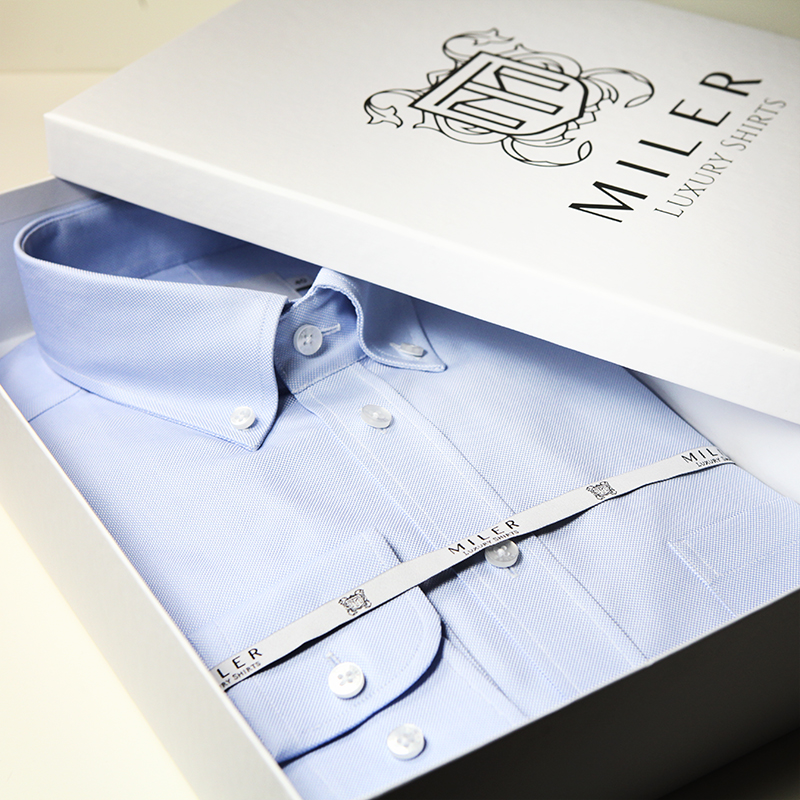
Miler Menswear shirts have all the quality markers described in the article, along with branding characteristic of luxury brands. The shirts are packaged in beautiful boxes and make an excellent gift.
Comments (2)