

Many men want to look relaxed in a jacket. Unfortunately, that effect can never be achieved by simply “borrowing” a suit jacket and pairing it with jeans. True ease and effortless style come only from a sports jacket, which looks outstanding when combined with casual pants. Today, we break down the sports jacket into its essential elements, highlighting the features that define a well-crafted sports jacket.
Not all jackets are the same…
A suit jacket and a sports jacket differ significantly from one another. While both are considered formal garments, the former is designed to give a man a serious and distinguished appearance, whereas the latter is meant to convey a more relaxed and casual elegance. This effect is achieved through differences in construction that may seem subtle at first glance, but are in fact quite distinct. The illustration below highlights these contrasts, which we then describe in detail.
.jpg)
1. Fabric texture
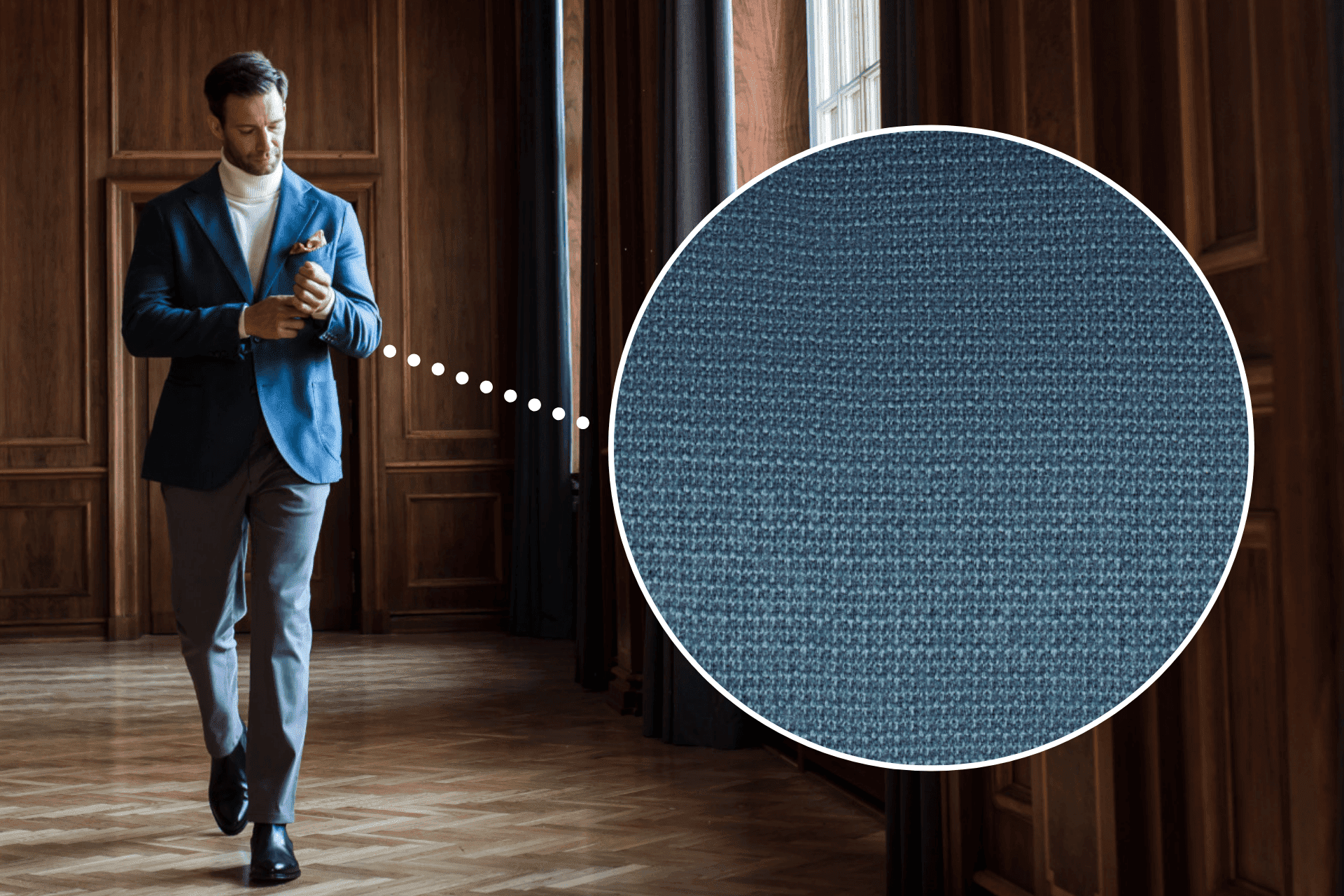
Although at first glance most people focus on the cut of a garment, it’s the fabric that is its true soul. None of the features of a sports jacket shapes its character more than the fabric. It’s the fabric that determines whether a jacket feels formal or casual. And the rules here are very straightforward:
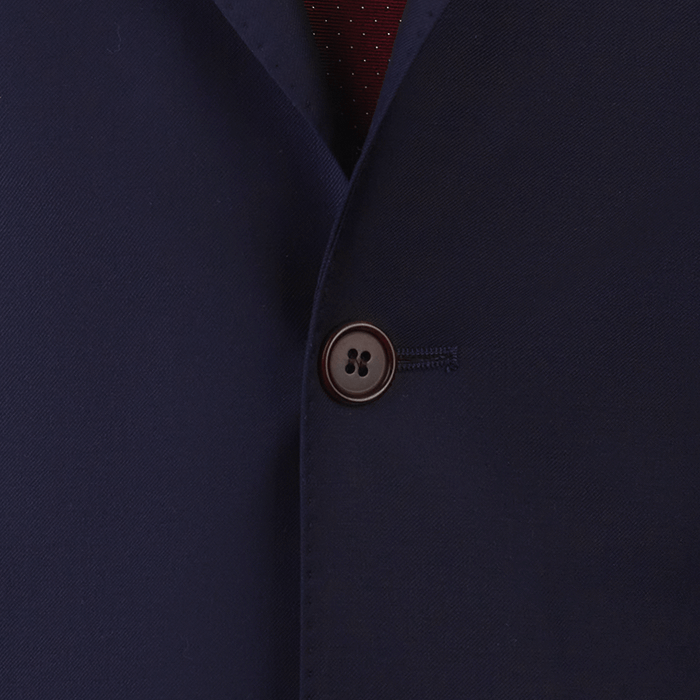
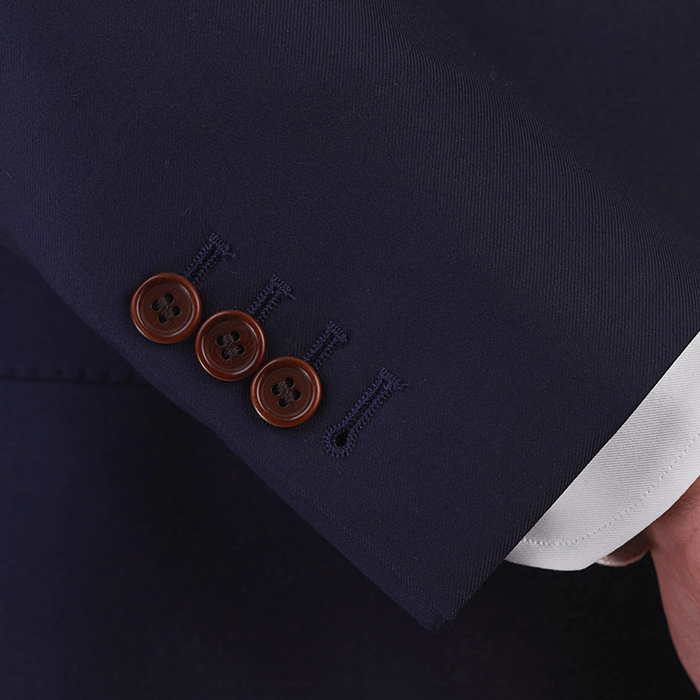
- Formal fabrics are tightly woven, which makes them smooth and often slightly lustrous — though always with an elegant sheen, never the shiny glare of polyester. A great example of a formal fabric is the wool used in our navy Phoenix suit, which is simply perfect for formal occasions such as weddings or business meetings.
.png)
- Informal fabrics are not defined as precisely. Most often, they are patterned and loosely woven, giving them a distinctive and interesting texture. These qualities are exactly what make us perceive a garment as either formal or casual. The roughness of casual fabrics means they reflect far less light, eliminating any sense of high-gloss formality. A great example is the sea-green Madeira jacket:

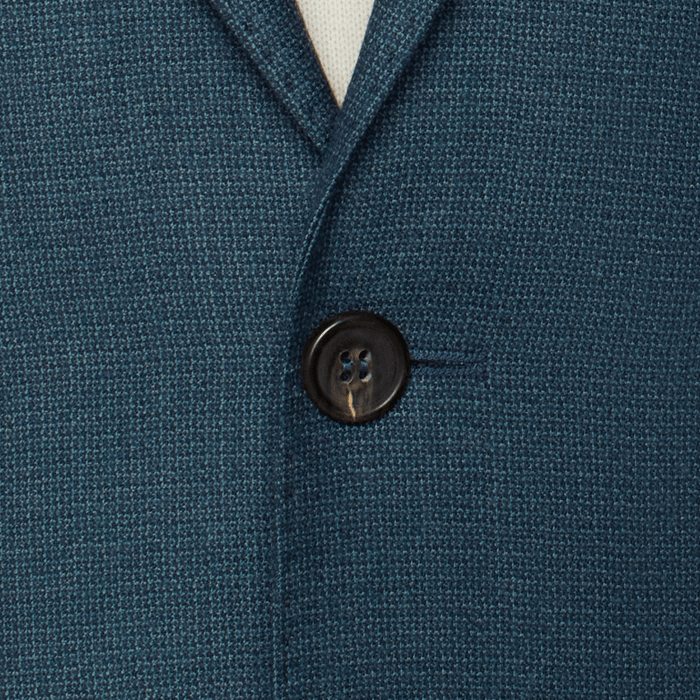
“It’s the fabric that defines a garment’s formality. Without an informal fabric, there can be no informal jacket.”
2. Shoulder padding
Large shoulder pads have military origins and are tied to the idea of projecting hierarchy. Their purpose is to visually broaden the shoulders, signaling strength and authority. This is precisely the effect behind the power suit once favored by Wall Street brokers. A sports jacket, however, is not a suit jacket, and it looks far better when kept soft, which is why the padding is much lighter. That said, one cannot ignore the structural function of shoulder filling — it’s what ensures the sleeve drapes properly, so it cannot be removed entirely. Still, lightly padded shoulders are appreciated because, instead of conveying authority, they radiate ease and casual charm.
.jpg)
3. Construction
While the dignity of a suit requires maintaining its form and contours, a sports jacket may embrace the wearer’s torso a bit more casually. For this to be possible, it must be made “softly.” This is precisely why a sports jacket often has a half-lining instead of a full lining, which minimizes its construction.
.JPG)
A construction with a half-lining is often associated with high temperatures, but it can be an interesting solution throughout the year—enhancing thermal comfort in summer and allowing for an additional layer of clothing under the jacket in winter (e.g., a sweater over a shirt).
4. Narrow sleeves
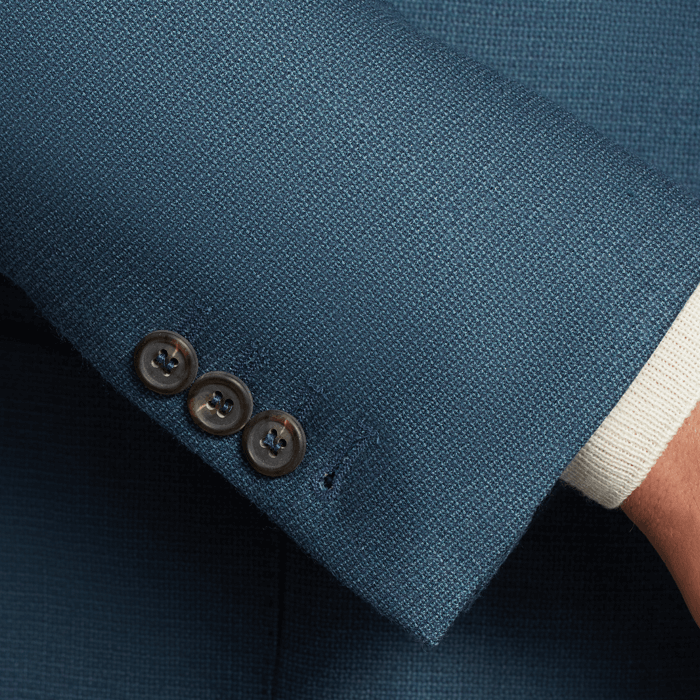
Although very few people actually realize it, sleeves are a very important element of a sports jacket. A cufflink shirt has wide cuffs that force the jacket sleeves to adapt. Since sports jackets are not worn with French cuff shirts, narrow sleeves look extremely attractive on them. Such a cut increases the “windows” between the arm and the torso, making the waist more visible.
.JPG)
5. Cut of the jacket
Many people like to list the cut of a jacket as the very first element that influences its formality. At Miler Menswear, however, we believe that if all the above conditions of informality are met, then the cut becomes of secondary importance. Nonetheless, we must admit that when a sports jacket has a strong and informal foundation built from the right fabric and construction, it is pleasant to complement it with a harmonious finish in the form of an appropriate cut.
.JPG)
There are a number of elements associated with casual clothing, which of course includes the sports jacket. These include slanted pockets, patch pockets, additional buttonholes on the lapels, and in the case of tweed jackets, also elbow patches. At Miler Menswear, we believe it is important not to overdo it—using these elements in the right combination and in the right amount, always seeking tasteful solutions.
Jacket inspirations
Below we present other sports jackets that can serve as inspiration for your own outfits:
.JPG)
.JPG)
.JPG)
.jpg)
.jpg)
.jpg)
.jpg)
.jpg)
.jpg)
.jpg)
.jpg)
.jpg)
.JPG)
.JPG)
.JPG)
.JPG)
.png)
.png)
.png)
.png)
Comments (0)