

A tuxedo is an evening garment that fits into the dress code commonly referred to on invitations as "black tie" (which is less formal than "white tie"). A tuxedo can make a fantastic choice for a wedding outfit, but to wear it successfully, one must understand the set of rules that define how and when it should be worn.

There are several types of tuxedos and nearly endless ways to combine tuxedo accessories. However, it can be said that a tuxedo is a garment made from black or navy fabric — the latter often referred to as midnight blue (a shade of navy very close to black) — along with silk used to cover the lapels of the jacket, the side stripes on the pants, and the cummerbund worn around the waist. In special circumstances, a tuxedo may also be made from white fabric.
Characteristics

Without a doubt, the most important elements of a tuxedo jacket are the silk-covered lapels, which can be seen on almost all tuxedo styles. The buttons are covered in satin, and the pockets should be jetted — though it's worth noting that these pockets are best left sewn shut to help them maintain their shape for as long as possible. After all, functional pockets are not essential in a tuxedo!
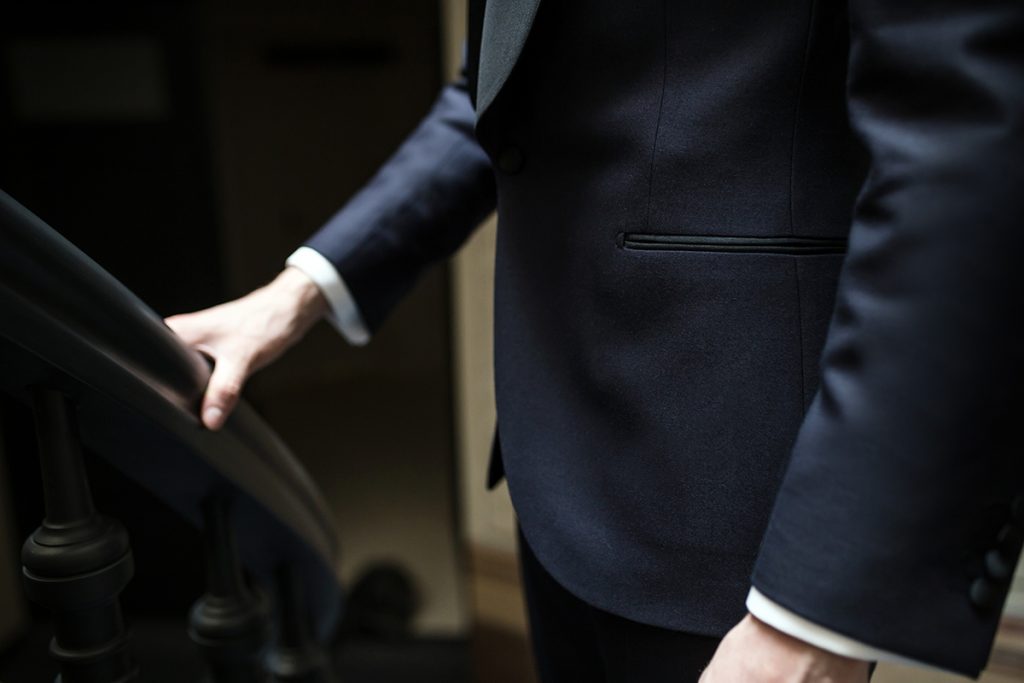
A brief history of the tuxedo
In the 1830s, evening gatherings were very popular in England, which led to the need for attire that was less formal than a tailcoat, yet still allowed men to look spectacular in black and white. The first prototype of the tuxedo — that is, an evening garment with a short jacket, as we know it today — was commissioned by the Prince of Wales (later Edward VII) at the tailoring house Henry Poole, located on the legendary tailoring street Savile Row in London. The tuxedo, in the form we recognize today, did not emerge until the 1930s, when it became a "casual" alternative to the tailcoat.

Tuxedo jacket
The most formal tuxedo jackets are made without any rear vents, while less formal versions may have two of them. Vents in a jacket make it easier to put your hands in your pant pockets — but in the case of a tuxedo, that’s hardly the point. A single center vent in a tuxedo jacket is not considered appropriate. While it may sometimes appear in ready-to-wear (RTW) tuxedos, it should be stated clearly: this is not an attempt to modernize the tuxedo, but rather a practical compromise — a result of manufacturers using the same templates as for sports jackets. A tuxedo with a single vent, when custom-made, is considered unacceptable and indicates that the tailor lacks proper knowledge of eveningwear standards.
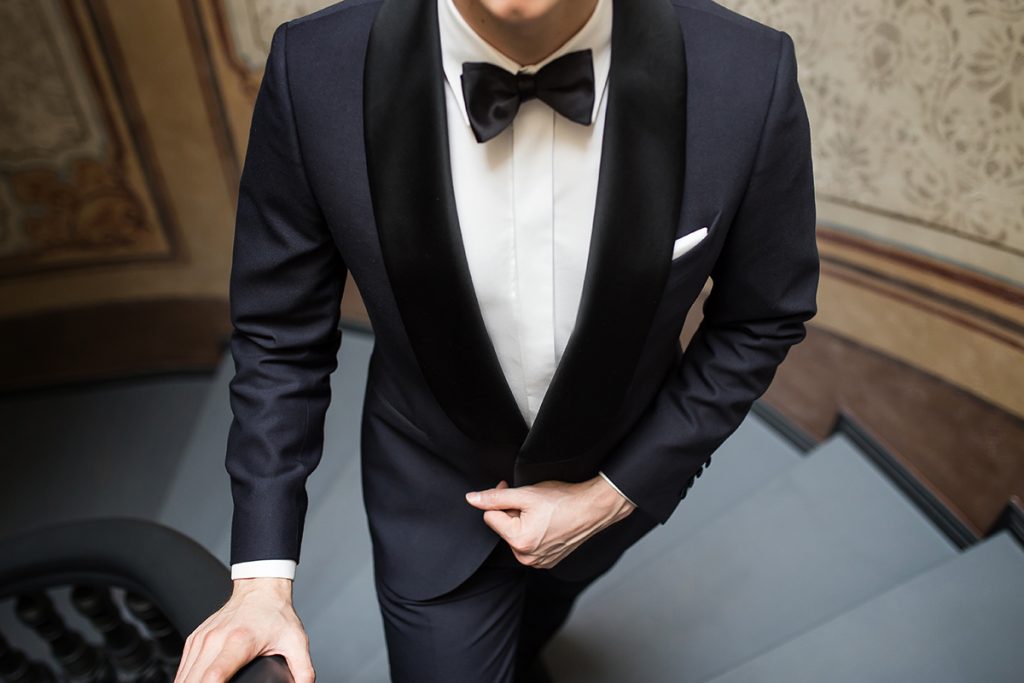
A tuxedo jacket can come in several different variations. Below is a brief description of each one.
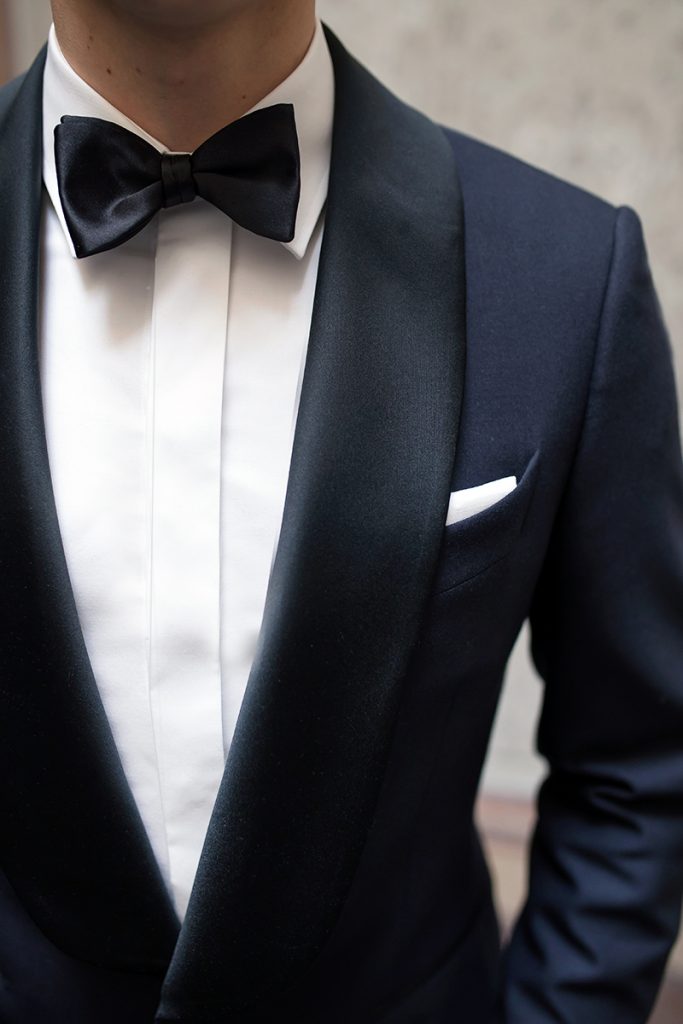
Single-breasted tuxedo with a shawl collar
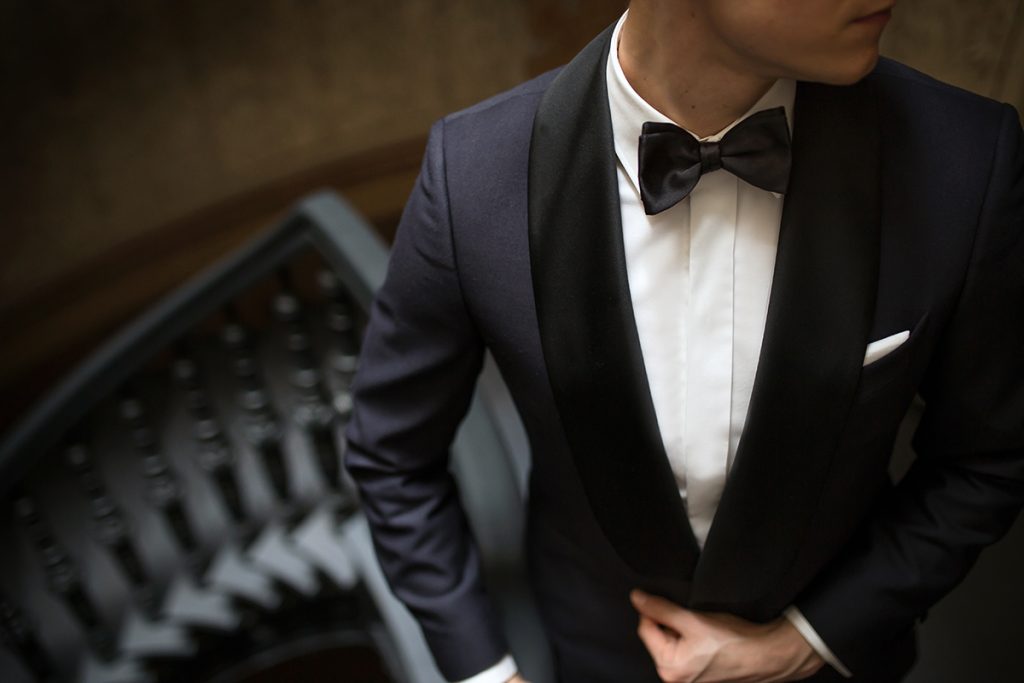
This is the most common form of tuxedo. The shawl collar is characterized by the absence of a notch, meaning there is no break between the lapels and the collar that wraps around the neck. The collar on a tuxedo is covered in silk, which stands out with its subtle sheen against the matte fabric of the jacket’s body.
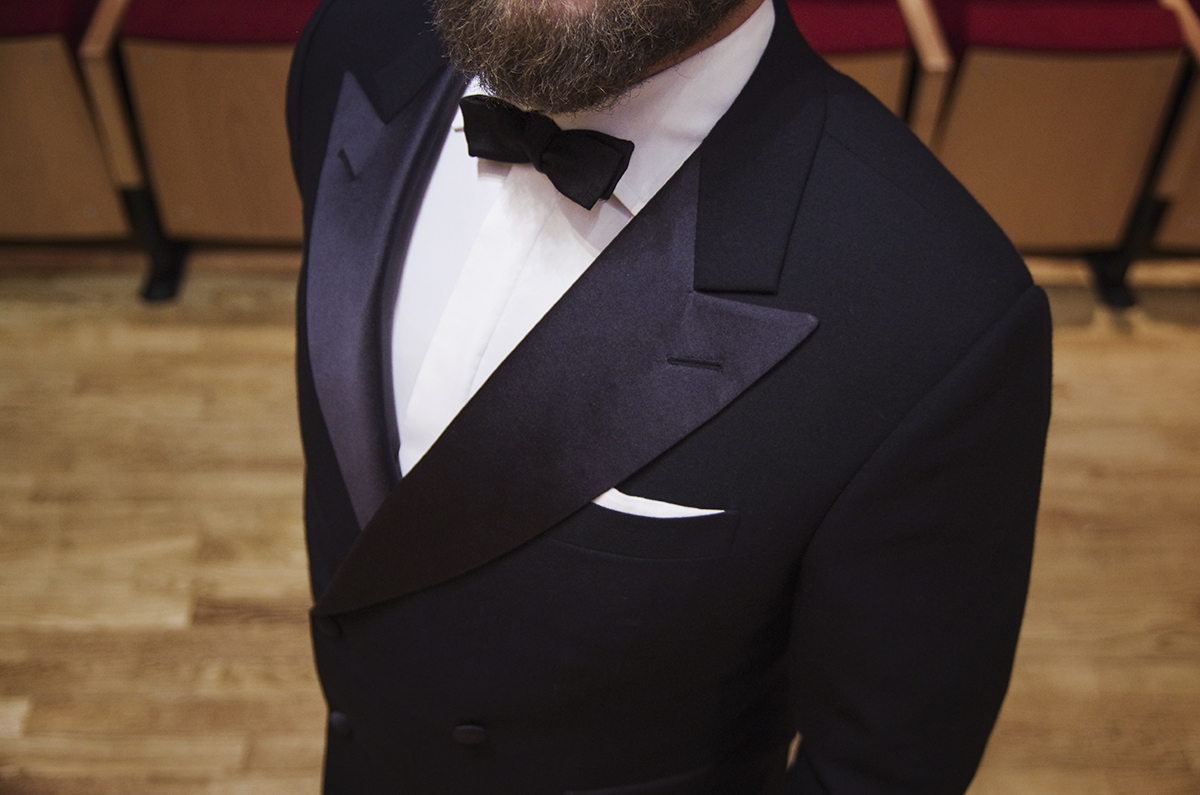
Single-breasted tuxedo with peak lapels
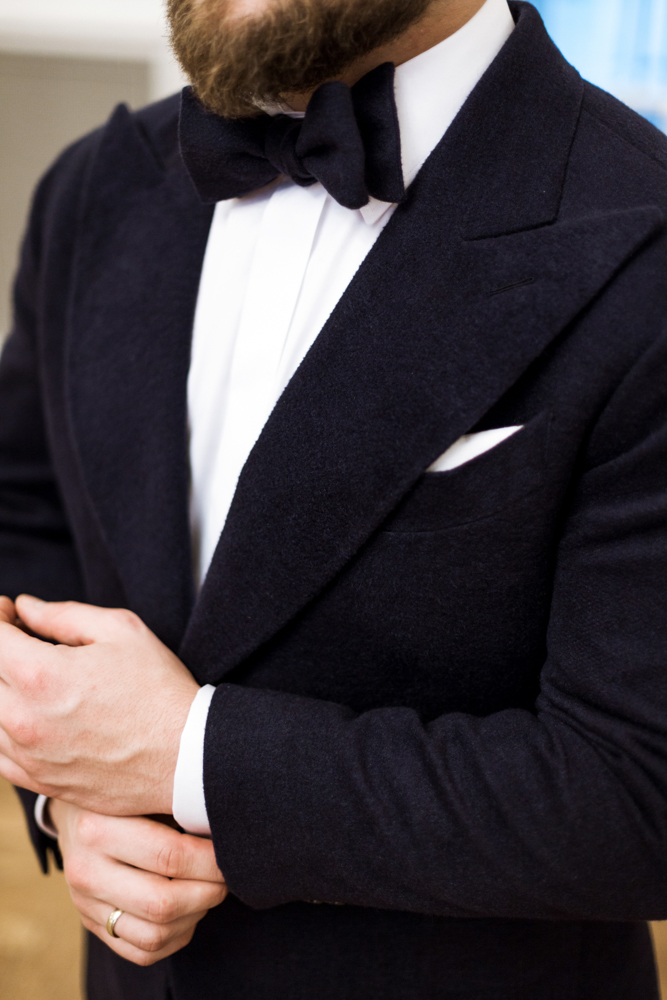
This is a tuxedo whose structure resembles that of a shawl-collar tuxedo, but its lapels are inspired by tailcoats and double-breasted jackets.
Fun fact: In the photo, we see a special type of tuxedo jacket that does not feature the traditional contrasting silk lapels. Instead, the lapels are made from the same fabric as the rest of the jacket. This is a velvet smoking jacket, which references the garment once worn when entering a smoking lounge. The material was excellent at absorbing the smell of smoke and protected the tailcoat or tuxedo worn underneath. It was also used as comfortable loungewear, similar to a dressing gown. Later, however, it gained popularity as outerwear and began to be worn as a fully-fledged piece of evening attire.
Double-breasted tuxedo
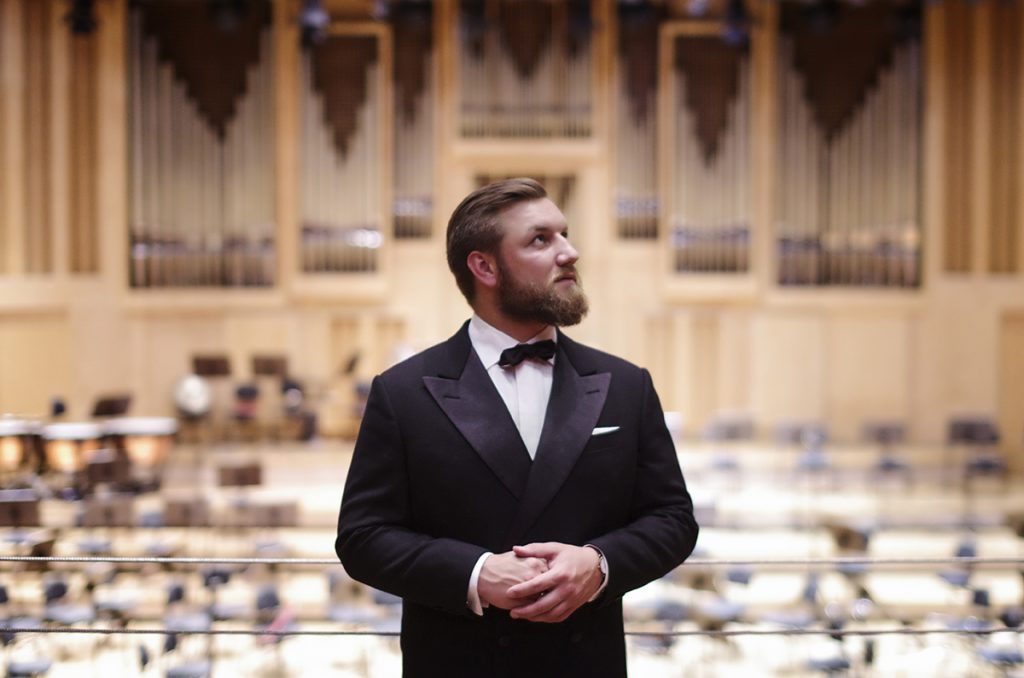
This is the least common type of tuxedo. In overall structure, it resembles a standard double-breasted jacket and may feature various button configurations. Naturally, the lapels are covered in silk, in keeping with formalwear tradition.
Summer tuxedo
.jpg)
There are also stunning summer tuxedos, which are made from white fabrics. They originated in the 1930s and appeared in hot climates as an alternative to the classic black or navy tuxedos. The unique charm of summer tuxedos makes it easy to imagine oneself wearing one — and to start reconsidering the traditional black or navy palette. However, those new to formal eveningwear should know that white summer tuxedos are meant to be worn exclusively in tropical or subtropical climates.
Cummerbund
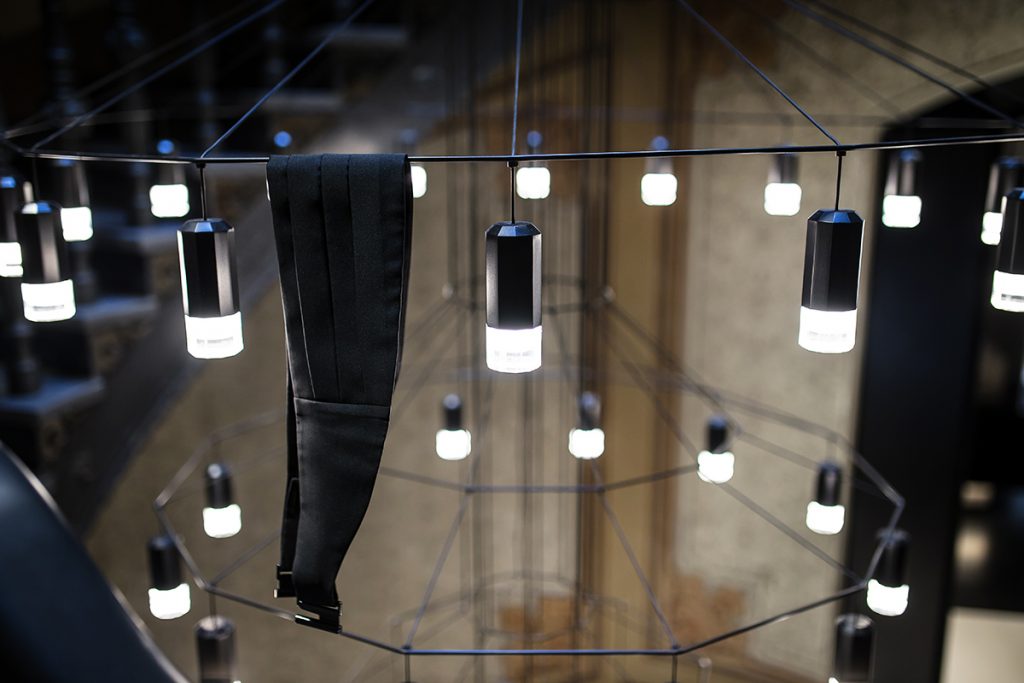
Because a single-breasted tuxedo jacket is unbuttoned when sitting, a properly worn single-breasted tuxedo also includes a waist covering — either a cummerbund or a vest — which spares others the view of a wrinkled shirt around the hips. When cummerbunds first appeared, they were mocked by enthusiasts of more orthodox tailoring. However, today they are far more popular than vests or double-breasted tuxedos, with which cummerbunds are not worn.
Tuxedo vest
A vest is a rarely seen element of the tuxedo ensemble. Unlike the vests found in three-piece suits, the tuxedo vest is cut much lower. While a suit vest typically has five buttons, a single-breasted tuxedo vest usually features only three buttons, and the same applies to the double-breasted version. In the case of the double-breasted style, the vest is usually finished with a straight bottom, rather than pointed tips. A properly fitted tuxedo vest should slightly peek out above the jacket’s front closure.
Pants and suspenders
Every tuxedo is paired with pants designed to be worn with suspenders. These pants feature a higher waist, one or two pleats, and a silk side stripe made from the same silk as the jacket’s lapels.
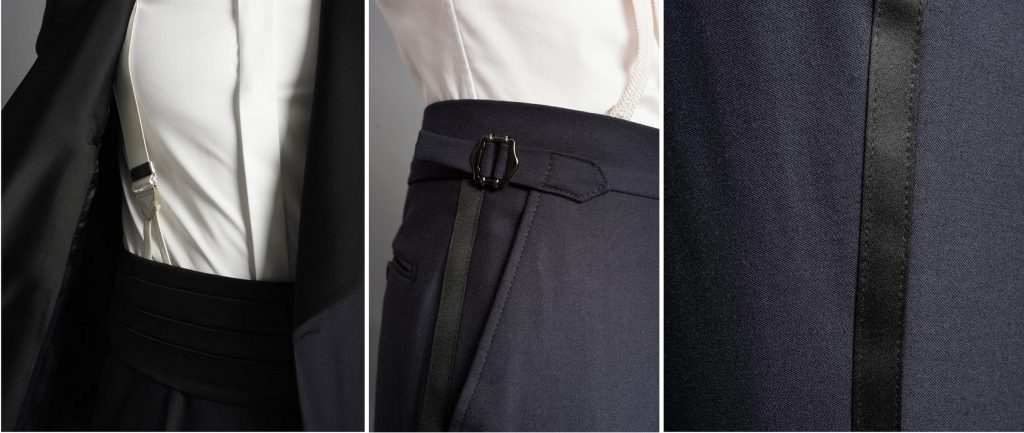
A tuxedo is a formal garment, so the pants do not have cuffs. White suspenders are worn with tuxedo pants.
Tuxedo shirt
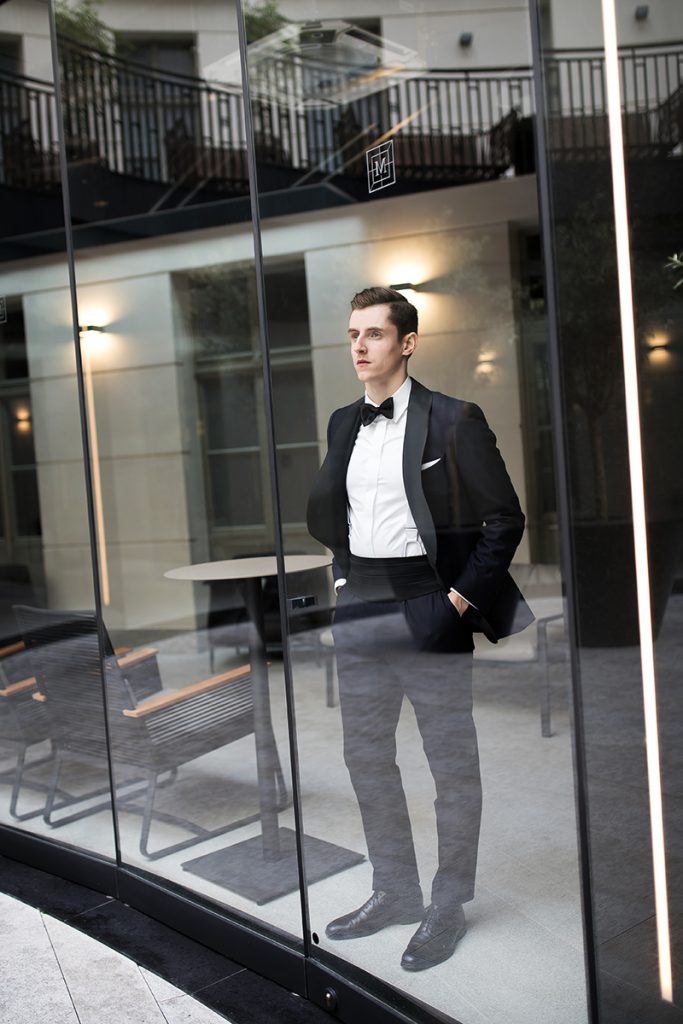
The most formal tuxedo shirts feature a wing collar, single cuffs, and a starched bib front, into which stud buttons are inserted. A slightly less formal option is the pleated shirt with a turn-down collar. The least formal, and probably the most commonly seen, is the shirt with a turn-down collar and a covered placket.
Tuxedo shoes
The general rule for evening footwear is that it should be as simple in design as possible — meaning minimal visible stitching or detailing. There are two appropriate types of shoes – pumps (also known as court shoes) and oxfords. The former should only be made from patent leather, while the latter may also appear in polished calfskin, finished to a high gloss.

Bow tie for a tuxedo
A tuxedo should be worn in combination with a bow tie made from fabric in the same color as the lapels. Tuxedos commonly feature both the “batwing” style bow tie, which, when untied, resembles a ribbon…
…and 2.5-inch butterfly bow ties, which look more like a traditional bow.
The rules for wearing a bow tie with a tuxedo are the same as with other outfits.
Tuxedo vs. suit
Between these two elegant forms of menswear, there are several key differences that help distinguish them. First and foremost, a tuxedo is formal evening attire, whereas a suit, depending on the occasion and the accessories chosen, can also be worn in less formal settings. Tuxedos are traditionally limited to black, midnight blue, and, in warmer climates, white. A suit, on the other hand, can come in virtually any color or pattern you wish. There are also structural differences between the two garments. A tuxedo features velvet- or satin-covered buttons, silk-faced lapels, and silk side stripes on the pants — details rarely found on suits. The tuxedo jacket typically has no vent or two side vents, while suits may vary freely in this regard. Tuxedo pants do not have cuffs, whereas suit pants may or may not. They also tend to have a higher waist and are meant to be worn with suspenders. In addition to suspenders, an important accessory for a tuxedo is the cummerbund, usually made of silk or velvet — something that is never worn with a suit.
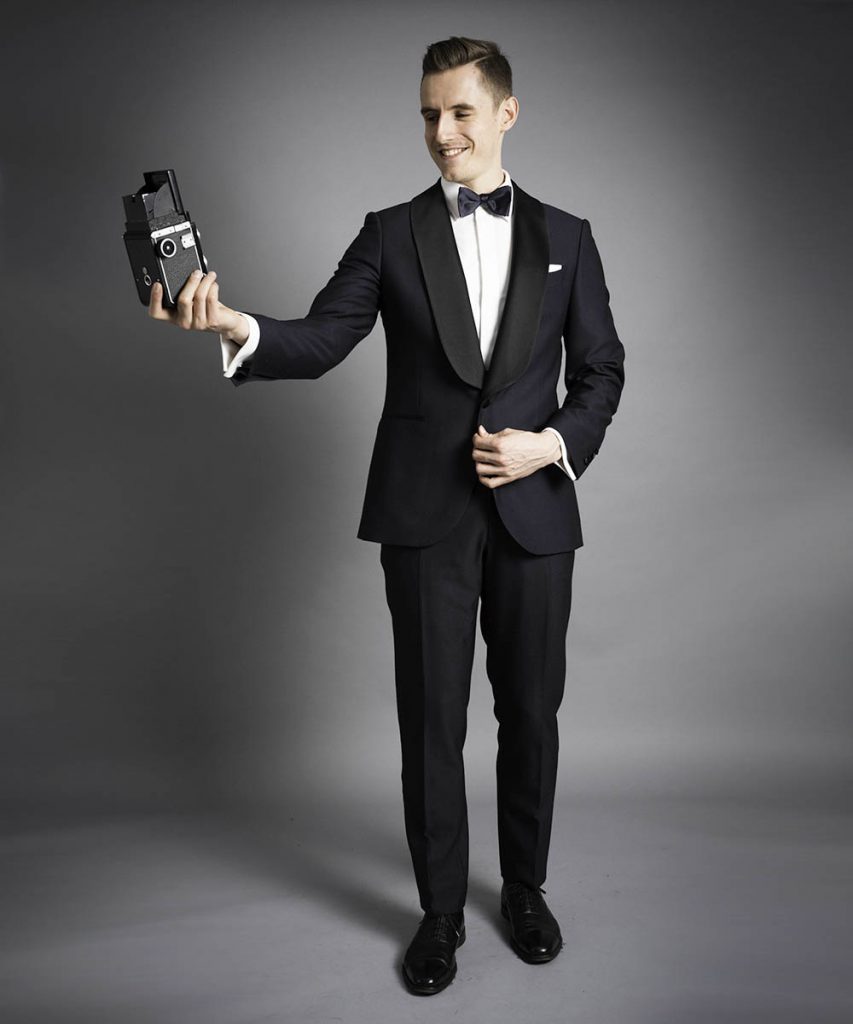
Tuxedo – most common mistakes
Time of day
A tuxedo is a garment that should be worn after fashion nightfall, meaning after 6:00 PM. In this context, wearing a tuxedo at the altar or at any other formal event held during the day is, in most cases, a breach of traditional dress code rules.
Pre-tied bow tie
You can ruin the entire look in a truly catastrophic way by wearing a pre-tied bow tie (a bow tie that cannot be untied and doesn’t require tying by hand). A pre-tied bow tie removes the opportunity to personalize your eveningwear, and that is its greatest weakness — it’s for men who need someone else to tie it because they can’t do it themselves. It is also a serious faux pas to wear a necktie with a tuxedo.
Inappropriate shoes
Only two types of shoes are appropriate for a tuxedo. All others are inappropriate — open lacing is a serious issue, and brown shoes are a complete disaster.
Pants with a belt
Even at high-profile international galas, it’s common to see men wearing a single-breasted tuxedo without a cummerbund or waistcoat, thereby exposing belted pants. Pants designed for suspenders are not a pointless "black tie" rule that can’t be verified anyway — they serve a real function. Suspender pants behave very differently around the hips compared to belted ones, allowing the pants to rotate slightly with movement, which in turn gives them a distinct appearance when a man walks.
Bespoke tailoring - MILER Menswear
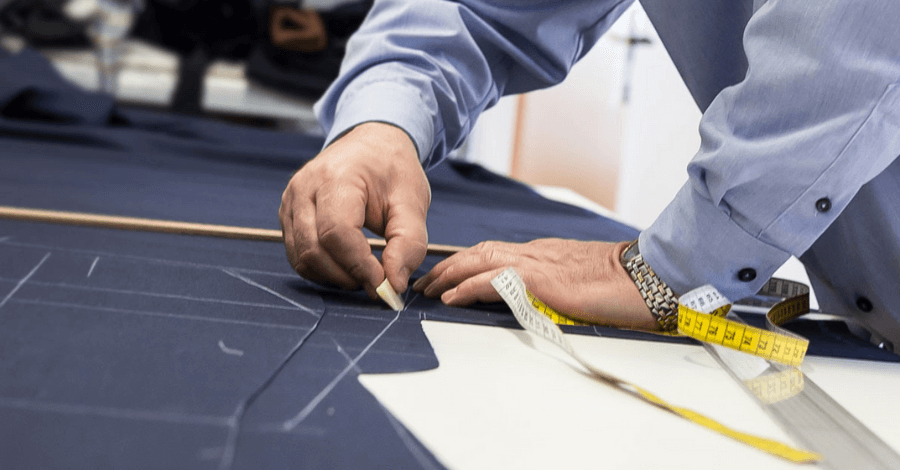
If the idea of a tuxedo sparks your imagination, we invite you to our showroom at Podgórna 4, where you can have one tailor-made just for you! Simply fill out the form to schedule a fitting:

We understand that before commissioning your first suit or jacket, you may have many questions. In our experience, the best solution is a conversation. We warmly welcome anyone interested in made-to-measure tailoring who wishes to step into this wonderful world. We are passionate about educating men in Poland, which is why we invite you to a free consultation where you can discuss your ideas with one of our made-to-measure specialists. We’ll show you swatches of prestigious fabrics to choose from and talk through the possibilities of having a suit, jacket, or shirt tailored to your needs. Above all, you’ll have the chance to get to know us – and for us to get to know you – which is an essential part of the tailoring process. The best results come when you trust us, and we have a clear understanding of what you’re looking for and whether we can help you achieve it. That’s why a conversation is so important. Please enter your name and phone number below. One of our specialists will call you within one business day to schedule your appointment at our made-to-measure salon in Poznań.
One of our specialists will reach out to you within one business day.
Kind regards and have a wonderful day.
MILER Menswear team
MILER Menswear team
Comments (7)