
There are 10 products.
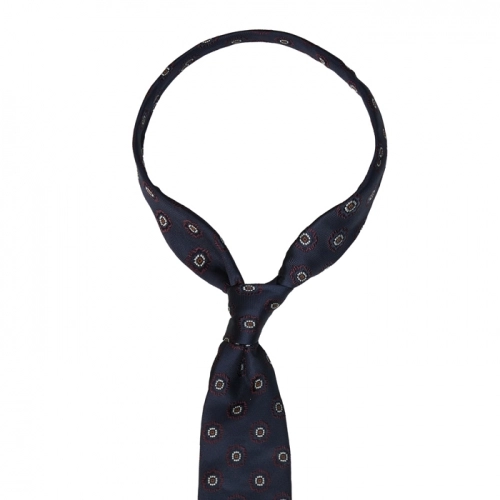
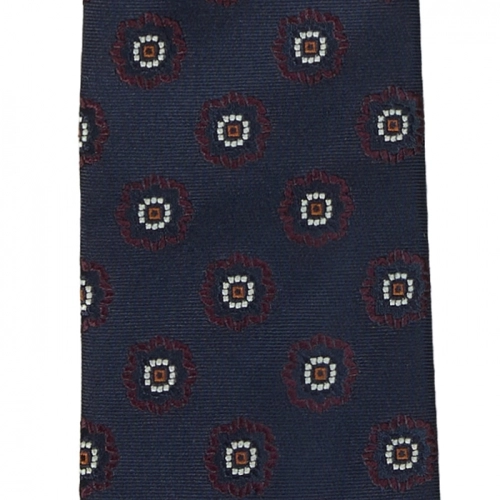
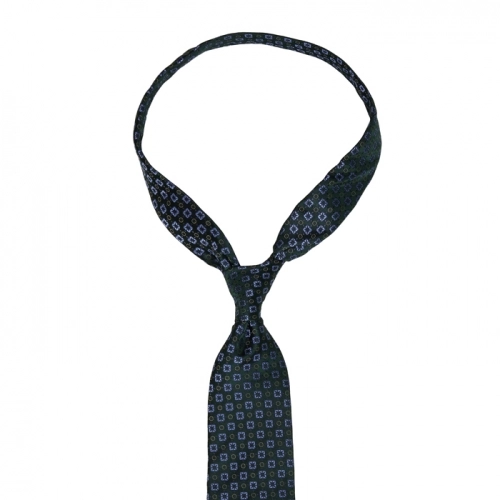
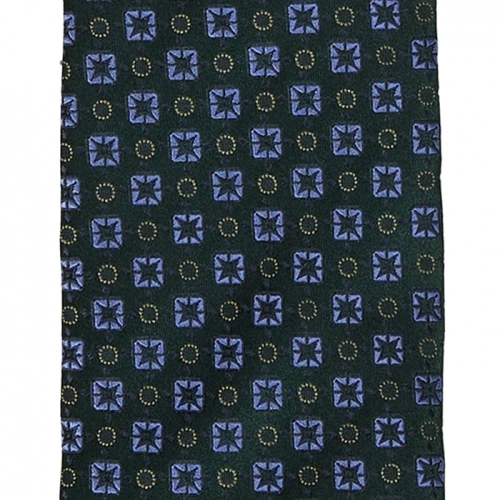
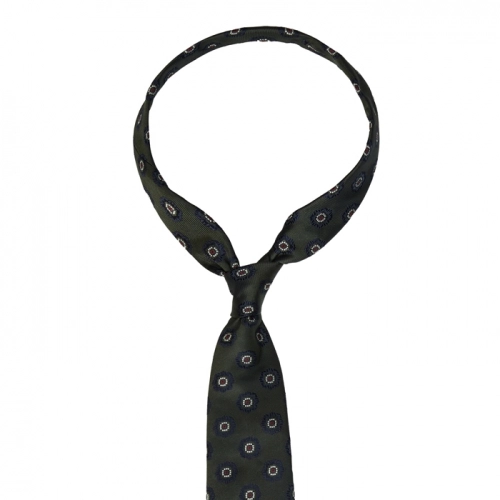
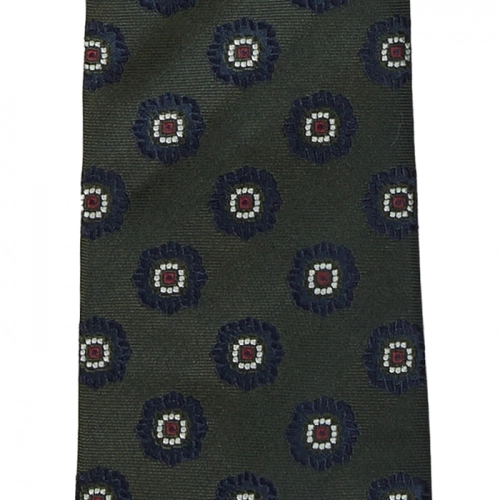
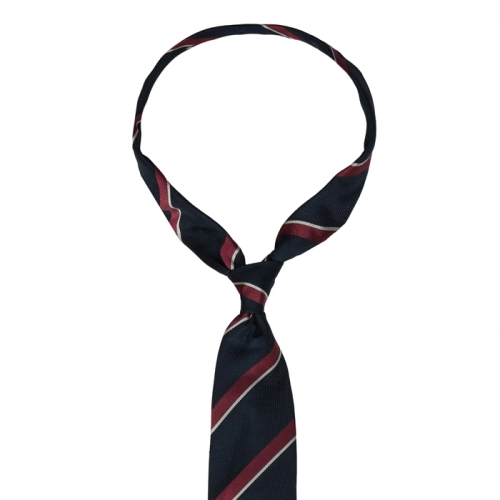
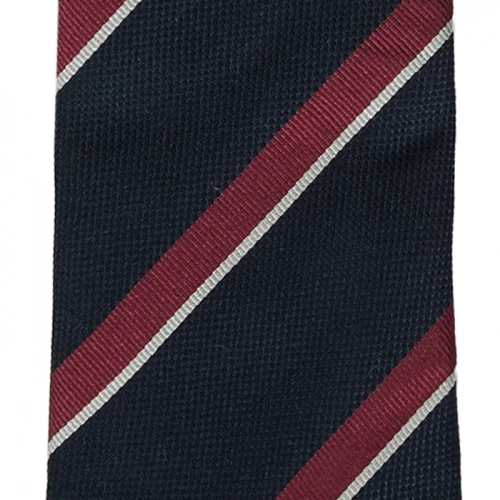
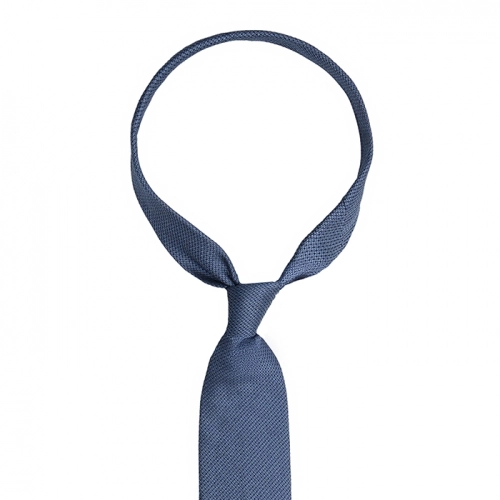
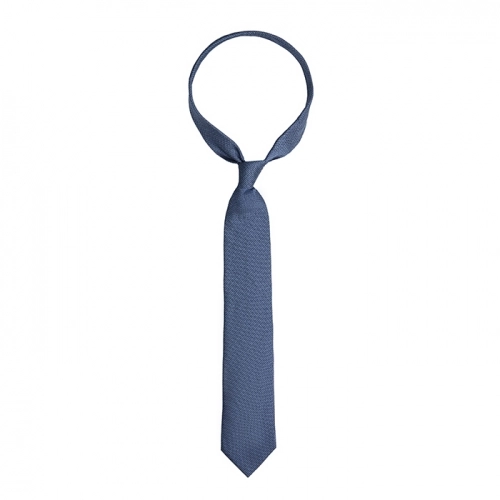
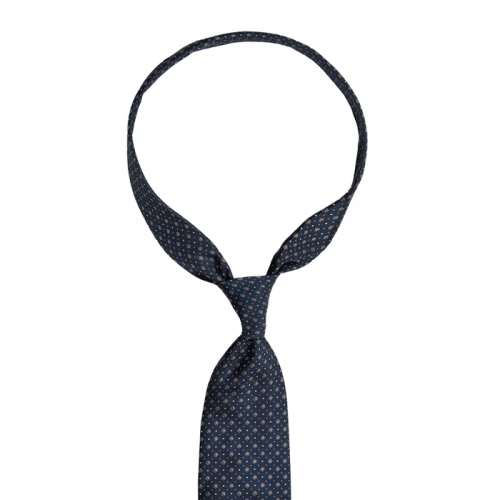
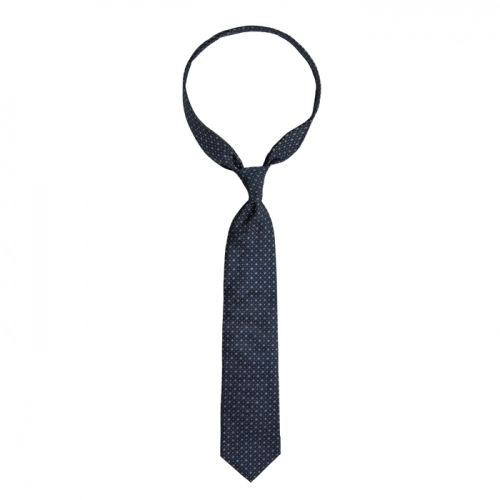
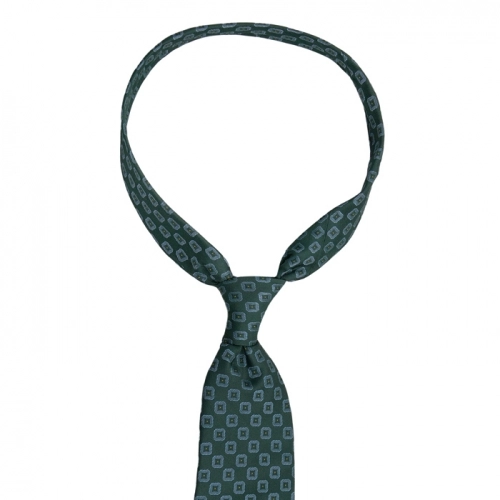
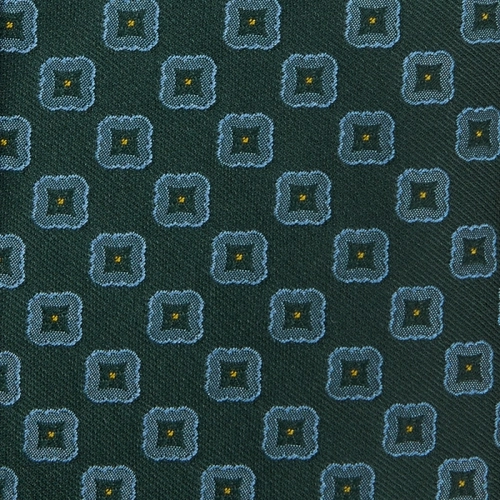
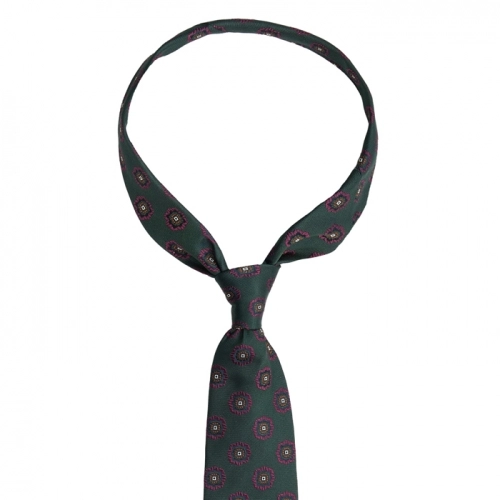
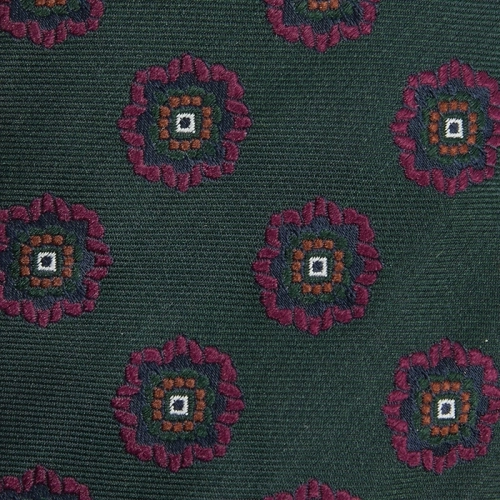
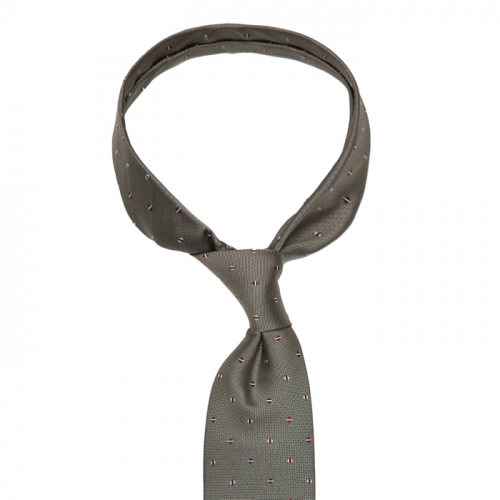
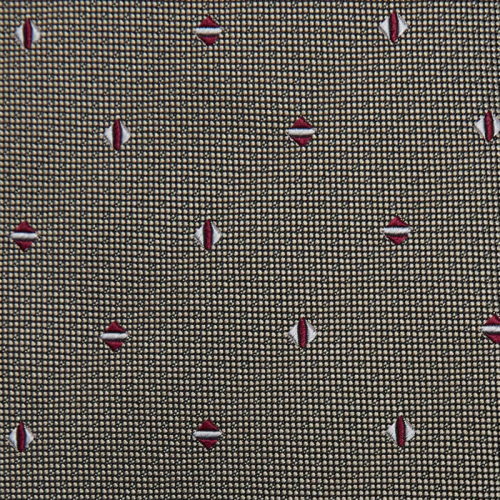
A men’s tie is an essential accessory in the wardrobe of every elegant and well-groomed gentleman. If you wear a suit regularly, you know how much of a difference the right tie can make! When it comes to accessories like ties, prices can vary greatly depending on the material and craftsmanship. At our store, you’ll find a diverse selection of men’s ties to suit every taste and occasion.
On the list above, you'll find a variety of ties: jacquard silk ties, printed silk ties, and wool ties. In the world of men’s fashion, the most popular accessory colors are navy, burgundy and green—all of which form the foundation of our tie collection. Of course, if your style calls for a red, gray, or brown tie, you’ll also find them in our store. Beyond color, patterns play a key role in shaping your look—adding originality and personal flair. A striped tie is an ideal choice for business outfits. For weddings, we recommend solid ties in navy or gray, or subtle patterns like the Prince of Wales check. Other popular options that pair well with jackets and suits include geometric and paisley patterns, animal prints, floral motifs , and textured or micro-patterned solid ties. We offer a wide variety of tie styles for every occasion. With such a broad selection of accessories, you’re sure to find something that suits your individual style!
What is the history behind the tie? The first men’s ties were worn in Croatia as early as the 17th century. Croatian mercenaries later brought them to Western Europe, and it was after this that the men's tie slowly began evolving into the form we recognize today. The version most similar to today’s tie appeared in the early 20th century. However, it’s worth noting that ties back then were significantly shorter. Why? Because pants were worn higher—around the waist—so a shorter tie could easily reach the waistband. These accessories were also wider, sometimes measuring 13 to 14 centimeters across. A narrower and shorter tie style was later popularized in the 1950s by a magazine called Esquire. Since then, ties have gone through numerous changes in both width and length—sometimes becoming wider, sometimes narrower. Today, a standard men’s tie typically measures about 7 to 9 centimeters in width.
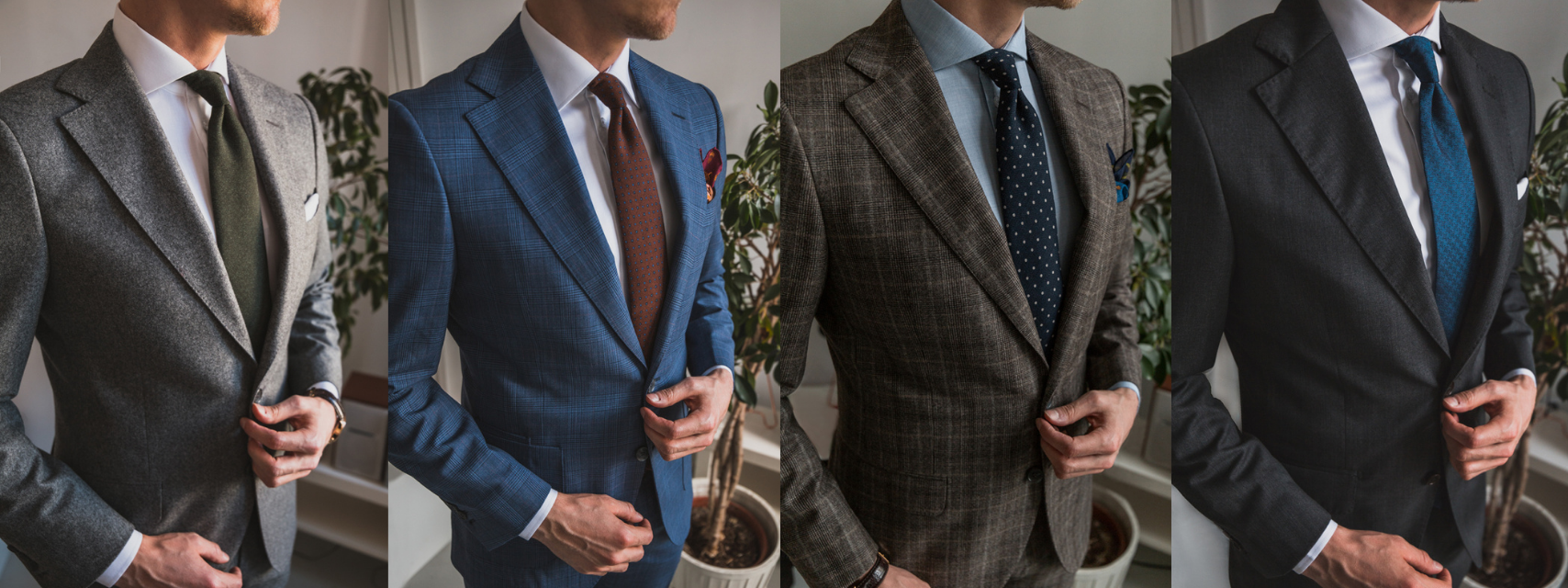
The construction of a tie involves many key details—it’s not as simple as it may seem. A standard men’s tie is typically about 150 cm in length, which suits most men between 165 and 185 cm in height. At MILER Menswear, our ties are slightly shorter by design, measuring 146 cm, making them ideal for modern styling and proportion. How can you recognize a high-quality tie? One indicator is the hand-stitched main seam, a hallmark of craftsmanship. As for the material, premium-grade silk is most commonly used in the finest ties. When evaluating the structure of a tie, the first thing to consider is the outer shell—the visible fabric. This is the most representative part of the tie, as it determines the level of formality, reflects the nature of the occasion, and even speaks to the wearer’s personal style.
Another important feature to pay attention to is the tipping—the lining visible at the two ends on the inside of the tie. Tipping may be made from the same fabric as the outer shell, which is often the case in high-end designs. In more cost-effective options, tipping is sometimes made from a less expensive material to reduce the use of premium fabrics like silk or grenadine. In some ties, tipping is omitted altogether—and instead, the tie is finished with a hand-rolled edge. This technique is highly time-consuming and requires skilled craftsmanship, which naturally contributes to a higher price point and signifies an elevated level of quality.
The next essential component of a men’s tie is often overlooked: the interlining. Why is it so important? Although it's hidden from view and easy to underestimate, the interlining is what allows a tie to knot properly and hold its shape. A well-made tie includes multiple layers of interlining, carefully selected to match the outer fabric. For example, if the outer shell is thin and delicate, the interlining is typically thicker and more structured to add volume. Conversely, when the shell is heavier or coarser—like wool—the interlining must be lighter and softer to make tying easier and more comfortable. But how can you recognize good interlining when shopping for a tie? Unfortunately, the only reliable method is by feel—through the so-called “handle” or “grip” of the tie. This comes with experience and practice. After all, a tie that looks beautiful isn't necessarily easy to tie. In this case, the old saying really holds true: “What’s inside is what counts.”
There are several types of ties when it comes to how they’re made. The most popular and widely used is the three-fold tie. In this construction, the outer fabric wraps around both the front and back of the tie, meeting at the seams.
Without a doubt, one of the most exceptional tie constructions is the seven-fold tie. Only a small group of people ever get the chance to wear one, but for those who are well-versed in classic menswear, it represents a truly elevated piece. A seven-fold tie is made by folding a single piece of silk seven times. These folds form both the outer shell and the internal structure of the tie, eliminating the need for a separate interlining. This method results in perfect balance, giving the tie a full-bodied feel and allowing for quick, smooth, and pleasant knotting. Thanks to its pure silk core, a seven-fold tie holds its shape beautifully and delivers a refined look. Naturally, because this construction requires about three times more silk than a standard three-fold tie, it comes with a higher price tag. Still, it’s an investment worth making—a statement piece that every true gentleman should aspire to have in his wardrobe.
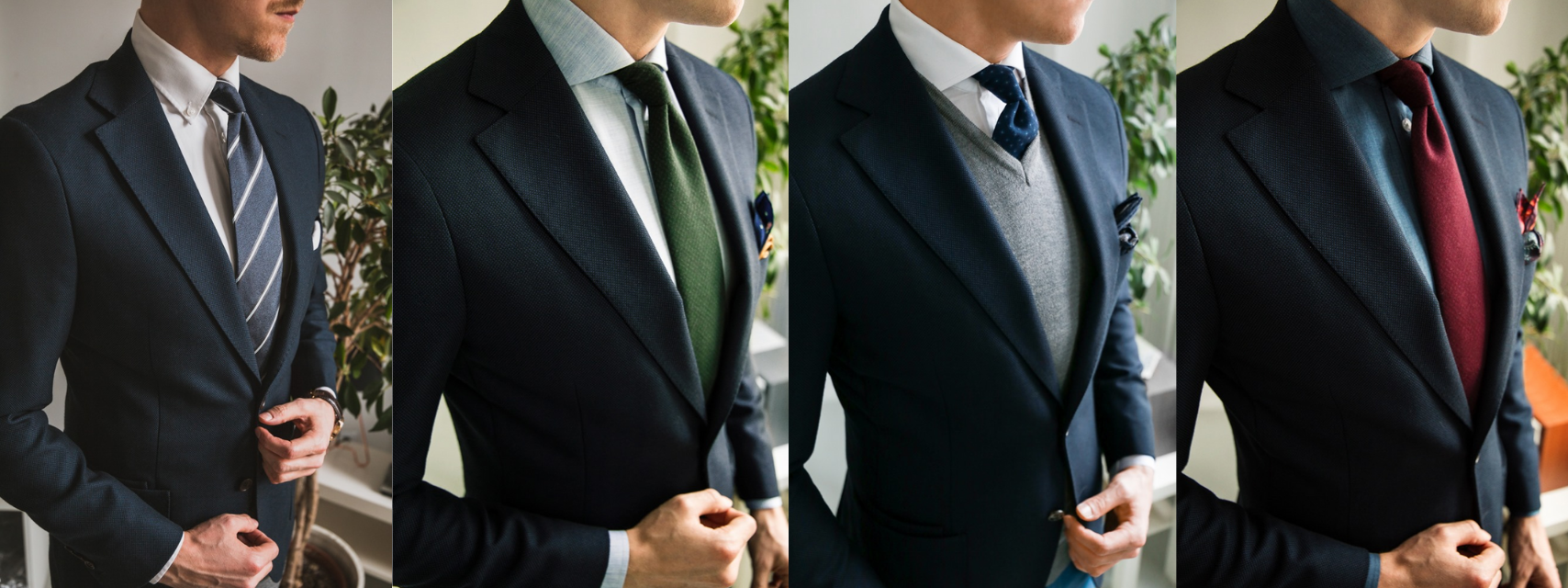
A general rule to remember is that a tie should reach the middle of your belt buckle. As for width, it should be chosen in proportion to the lapels of your jacket, which in turn should align with the width of your shoulders.
The range of tie formality is broad, but we can generally divide ties into three main categories: formal, semi-formal, and informal (also known as sport or casual ties). Each of these groups is distinct, and understanding the differences is essential for dressing appropriately and elegantly for any occasion. Whether a tie is well-received depends on how appropriately it’s matched to the situation.
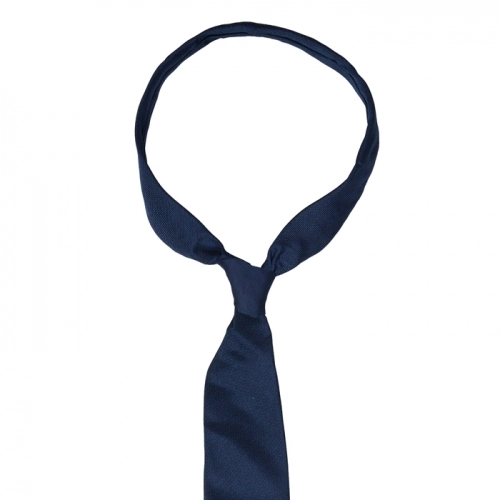
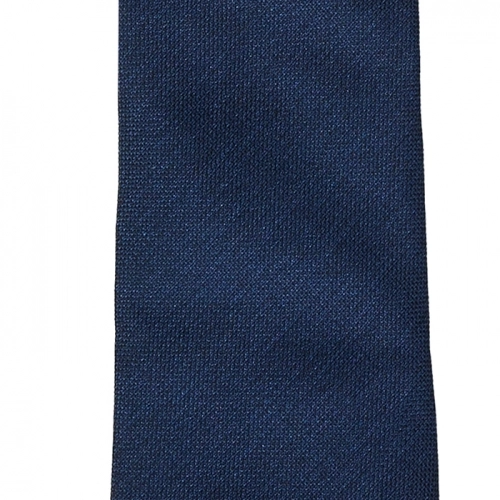
The general rule when it comes to the formality of men’s ties is quite simple and clear: the fewer the patterns, the more formal the tie. Similarly, the darker and more subdued the color, the higher the level of formality. As such, the most formal ties are those in dark shades and plain. Let’s focus on events just below the so-called white tie or black tie level—those most formal occasions where a bow tie and tuxedo would be worn. A very formal occasion would be a wedding. For such events, one should choose a solid men’s tie in a darker shade (such as navy) with a subtle texture. A slightly bolder texture is also acceptable if you're attending the wedding reception. When it comes to fabrics, you can choose between jacquard silk or printed silk. What’s the difference between them—and which tie should you choose?
In jacquard silks, the pattern is an integral part of the fabric, created by weaving together threads of different colors directly into the silk. In contrast, printed silk ties feature patterns that are applied with dye directly onto the surface of the fabric. As a result, printed ties often appear more subtle. This second type of tie is a great choice for more advanced dressers—those who already have a larger collection of ties in their wardrobe. Why is that? Printed ties are usually made from thinner silk, which makes them a bit more delicate and therefore more prone to wear and tear. Creases may also occur more frequently at the knot. So, when building your tie collection, it’s important to maintain a balance between these two types to keep your accessories looking sharp and well-maintained. It’s also worth noting that printed patterns tend to appear more vivid and defined.
When it comes to formal ties, there are varying degrees of pattern gradation. It's important to always remember that bolder and larger patterns are less formal. An interesting choice is the use of micro-patterns—not noticeable from a distance, but up close they delight the eye with their play of shapes and colors. Formal ties pair best with suits or with coordinated outfits. They are suitable not only for weddings, but also for business meetings.
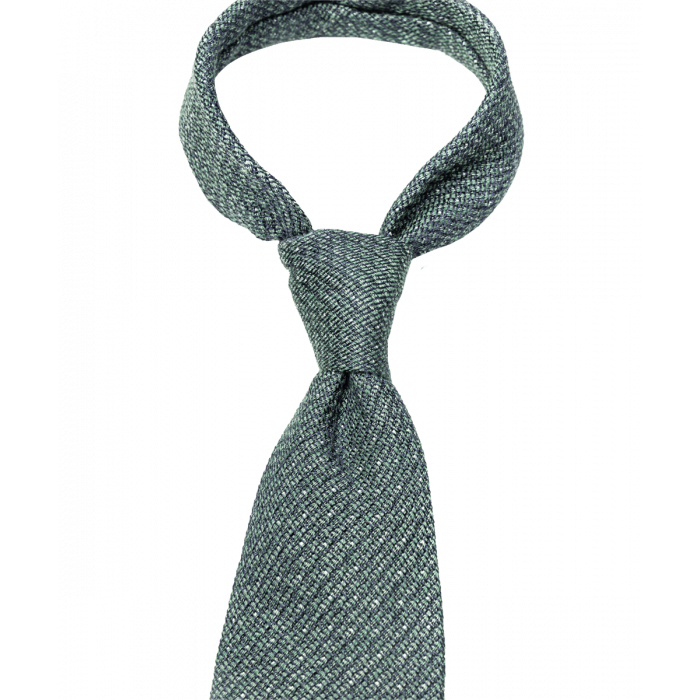
Silk still dominates in semi-formal ties, though it is often used in slightly more varied forms. When do we wear a semi-formal tie? It's perfect for family gatherings, elegant dinners, theatre outings, christenings, or frequent business meetings and office settings. Among our selection, men's ties made from grenadine are a true highlight. Grenadine is also a type of silk, but it is woven in a distinctive and uncommon way. Interestingly, only two looms in the world are capable of producing this weave. The technique gives the silk a unique texture—slightly coarse yet subtly lustrous, which reduces its overall formality. A grenadine silk tie is highly charismatic, rarely seen, and noticeably more expensive. However, it also requires special care, as the delicate weave is prone to snags and damage if not handled gently.
Another example of a semi-formal men’s tie is the printed tie, this time featuring bolder, more casual patterns. These ties are especially well-suited for extroverted individuals—those who enjoy drawing attention and feel comfortable being in the spotlight. Large ornamental patterns are making a comeback. For those with a more understated or conservative style, a classic micro-pattern tie is always a reliable choice.
The final category includes the least commonly seen of all: sport or casual men’s ties. They’re rarely spotted on the streets and are typically worn by the most confident and experienced individuals in the world of classic menswear. Still, they’re worth knowing about. Unlike the previous two groups, traditional silk does not dominate here. Instead, one standout fabric is shantung. It's a type of silk that has been finished in a way that leaves visible slubs and irregularities on its surface. This gives it a naturally textured appearance.
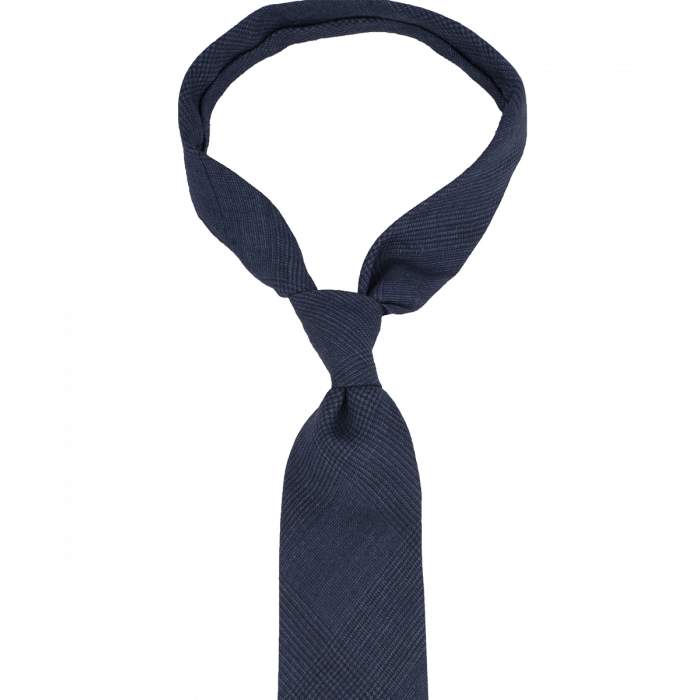
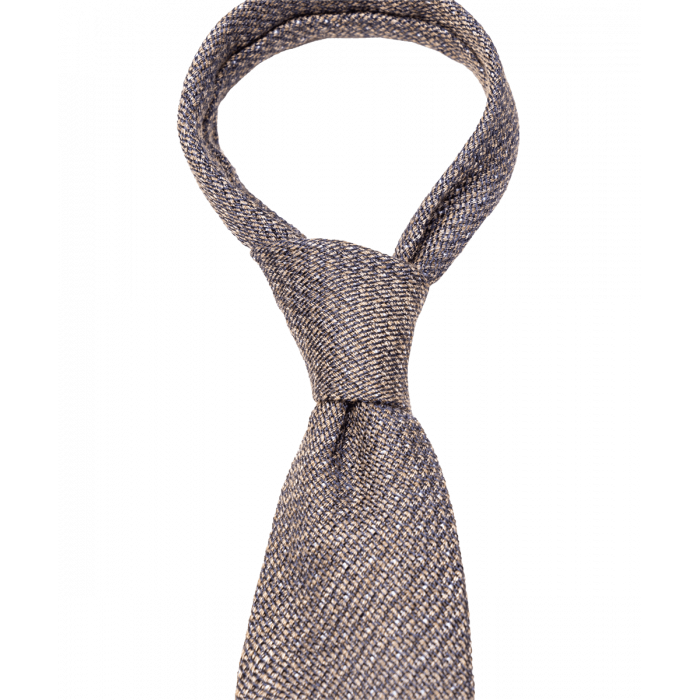
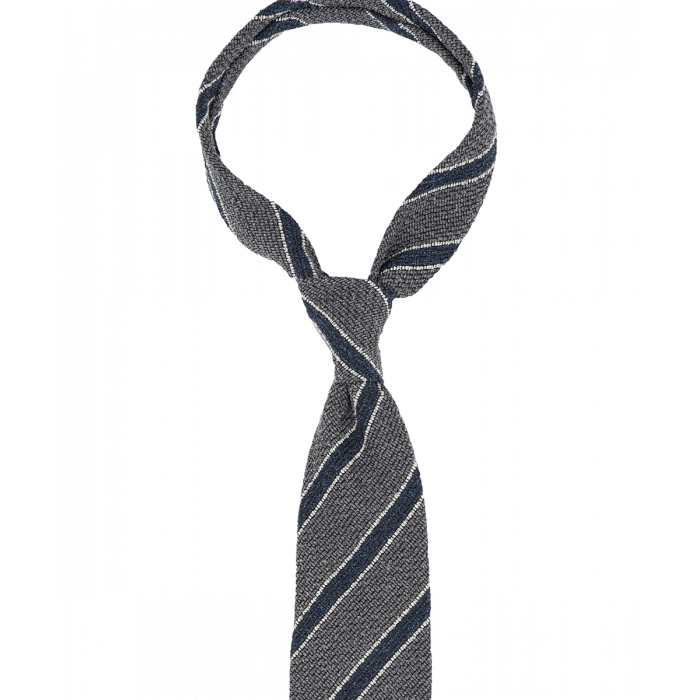
Another noteworthy option is the men’s tie made from wool—such as cashmere—which pairs well not only with suits, but also with jeans or chinos. Wool ties come in rougher textures with bold woven patterns or subtle printed designs. What should you look for when choosing this type of tie? Just like with any accessory, it’s essential that it suits you—that it becomes a kind of extension of your personality. Your unique and individual style is what gives you confidence. And what is elegant clothing without confidence? After all, elegance is also about comfort.
What seems like a simple and straightforward task isn’t always so quick or easy to master. But don’t worry! Tying a tie is a skill that anyone can learn—with enough practice and attention to detail. That said, it’s important to start practicing in advance, not on the day of an important event. There are many different types of tie knots, each suited to different needs. The knot you choose should take into account several factors: your face shape, the style of your shirt and collar, and the thickness and type of tie you're wearing. The most basic and beginner-friendly knot is known as the Four-in-Hand.
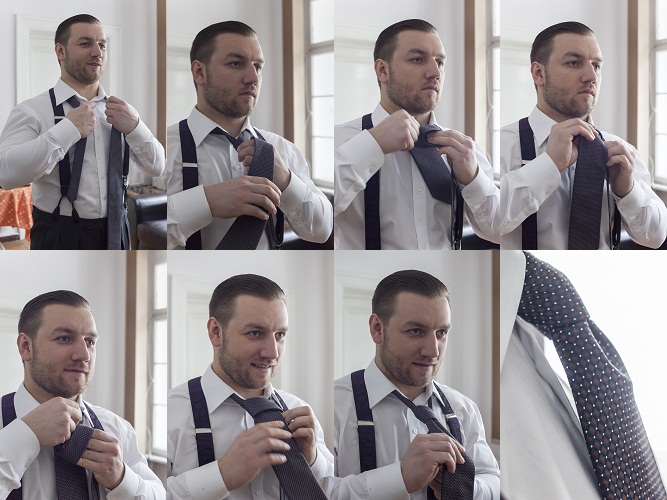
In addition to being the simplest, the Four-in-Hand knot is also by far the most versatile—and it presents a classic and refined appearance. That makes it an excellent choice for beginners. Even though the individual steps may seem almost trivial, it’s important to remember that tying a good knot is not as easy as it looks. It’s certainly not a skill you can master in one evening! That’s why, before any important occasion, you should practice the process multiple times. Tying technique is just one part of the equation; the structure and thickness of the tie also play a key role. A properly tied tie should completely cover the top shirt button and be firmly tightened at the collar. If the tie’s construction allows, it’s ideal to create a subtle dimple just below the knot—this small detail adds elegance and depth to the look.
It’s worth remembering that making your tie knot more complicated does not make it more elegant—in fact, quite the opposite! Surprisingly, each additional wrap actually reduces the formality and elegance of your look. The type of knot you choose should be appropriate to the construction and thickness of your tie. If you're looking to add a touch of charisma, it's better to explore thoughtful accessories rather than overcomplicated knots. For example, you can enhance your look with a tie pin. Another subtle way to introduce personality is by tying the front blade shorter than the back blade, creating a relaxed yet intentional style statement. There are many ways to personalize your tie, and with a bit of awareness and intention, you can choose options that enhance your look while still respecting the principles of classic men’s elegance.
At MILER Menswear’s online store, you’ll find a wide selection of top-quality ties for every occasion. We offer a wide selection and convenient delivery—making it easy to find something that matches your style and taste. Explore various patterns and color options—we guarantee our accessories meet the highest standards of classic men’s elegance. Shop now and see for yourself! If you’re looking for a tie, MILER Menswear is a great choice.
A burgundy tie is one of the more intriguing options—and definitely worth your attention. This color is highly versatile, pairing beautifully with garments in a wide range of shades. At the same time, it offers a chance to express a bit more individual style. If you’re tired of dark, muted tones or soft pastel shades, burgundy is a perfect choice. It brings life to any outfit and adds a touch of charm and character to your overall look.
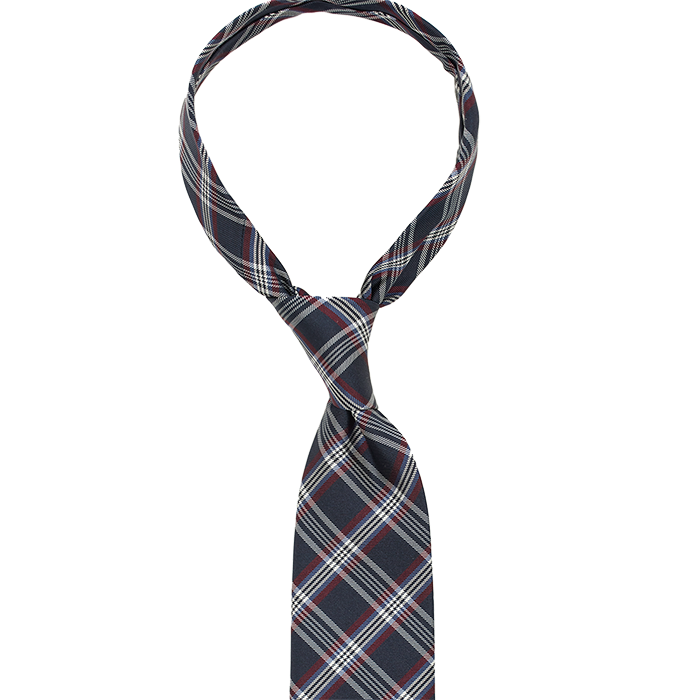
A checked tie is a truly charismatic accessory that will undoubtedly bring more personality to your outfit. If that’s what you’re after, this is the option for you. Checked patterns work especially well with sport jackets, making them a perfect alternative when you’re tired of plain, solid designs. The pattern adds life and flair to any look—instantly elevating your style. If you’re looking to diversify your wardrobe, a checked tie is a fantastic choice. Here are just a few options—available now at MILER Menswear.
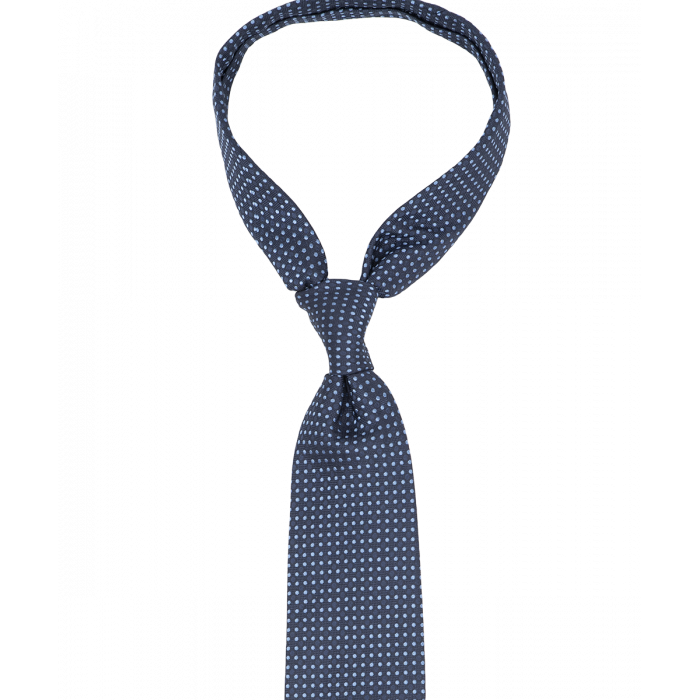
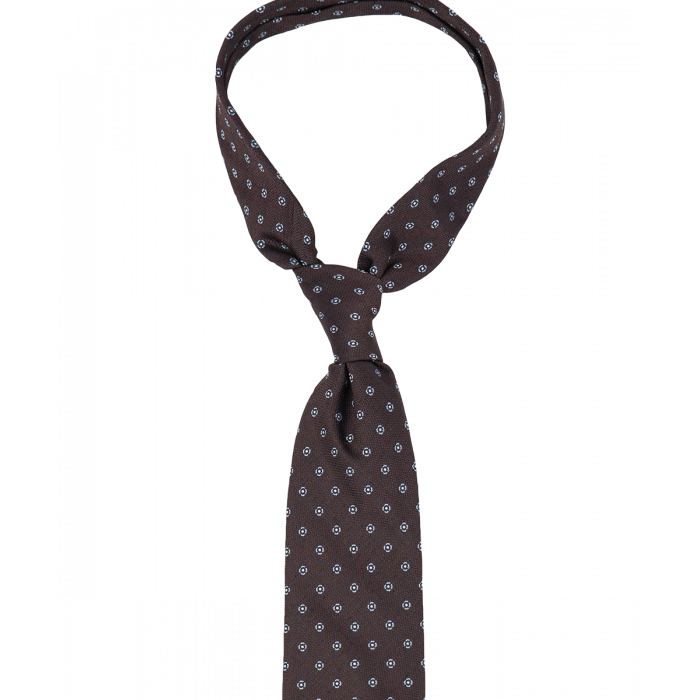
Dots are a great choice when you want to add a relaxed touch to your outfit. Both small dots and larger polka dots pair beautifully with a sport jacket. This pattern also combines well with other prints, giving you plenty of freedom when coordinating the rest of your wardrobe.
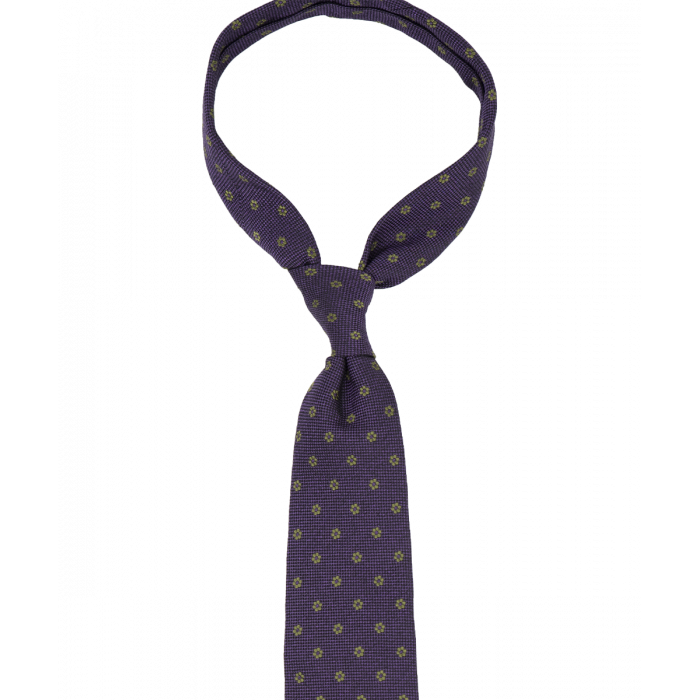
Floral patterns are a bold and original choice that can completely transform the character of your outfit. They’re an excellent option for occasions that fall into the semi-formal category. Thanks to their versatility, floral ties pair well with other patterns, giving you plenty of styling freedom. If you’re looking to add a touch of individuality and flair, a floral tie is definitely worth considering.
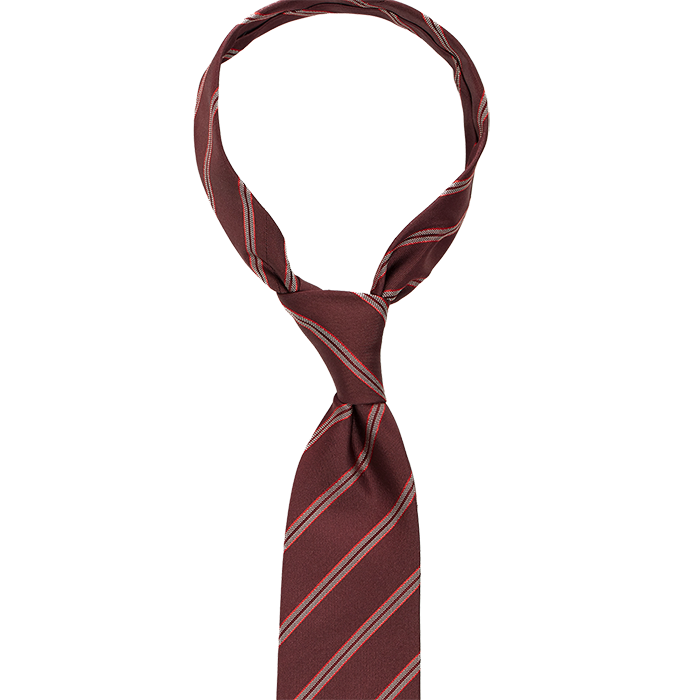
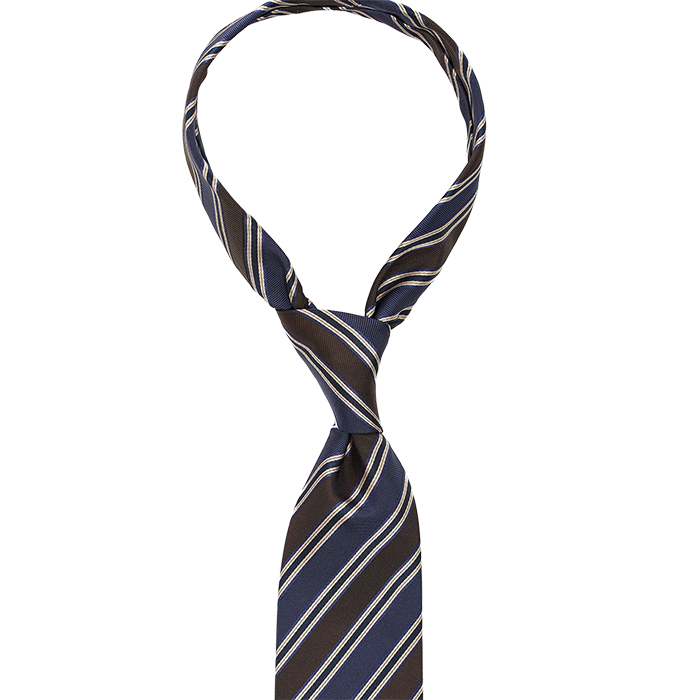
A striped tie is a great way to make your outfit more interesting. Whether you choose thin stripes for a subtle touch or bold, wide ones for stronger contrast, both styles offer timeless charm.
Trusted by 1,589 customers (4.6/5 on Google) • 110K Facebook • 36K Instagram • Ships from the EU (Poland) • 14-day returns
Trusted by 1,589 customers (4.6/5 on Google) • 110K Facebook • 36K Instagram • Ships from the EU (Poland) • 14-day returns
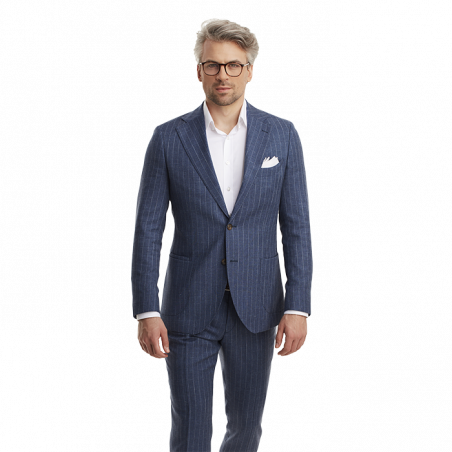 Blue pinstripe Madeira suit
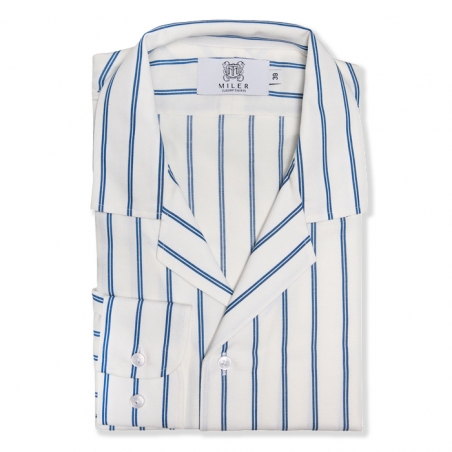 Men’s blue striped Cuban collar shirt in a tencel-linen blend
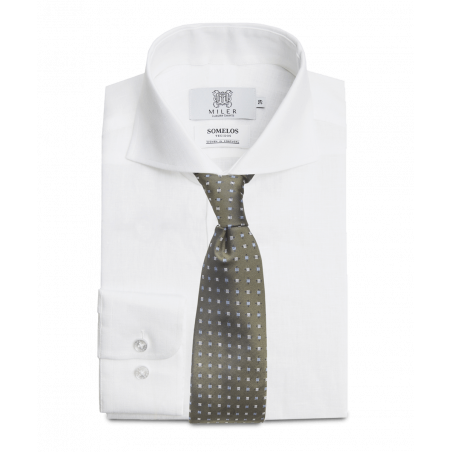 Men's white linen shirt
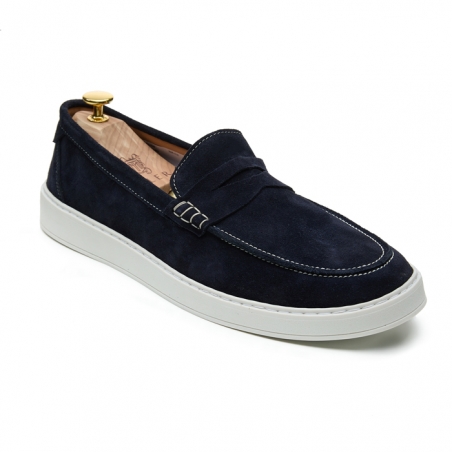 Navy suede men's moccasins
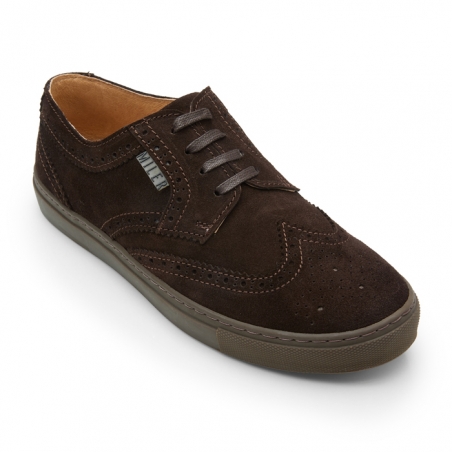 Brown suede shoes with a chunky sole
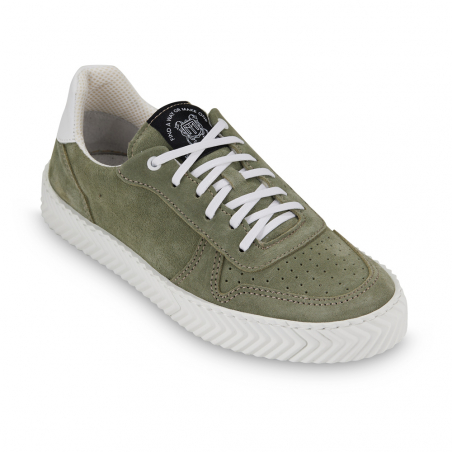 Men's suede sneakers in smoked green
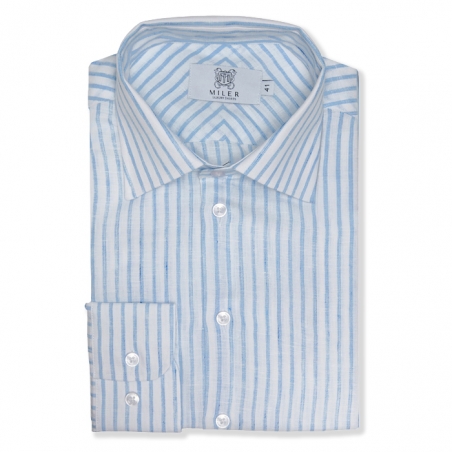 Men's white linen shirt in light blue watercolor stripe
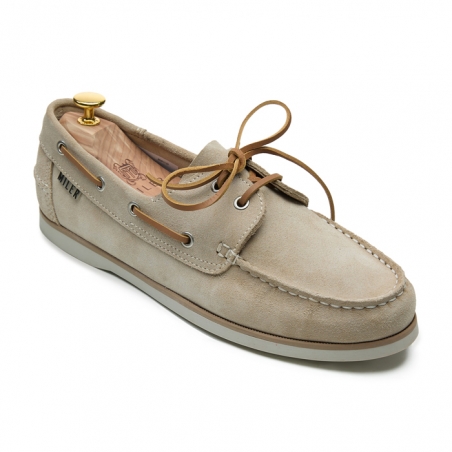 Beige suede boat shoes with white sole