
-
Language:
-
Currency:
-
acc3 Account

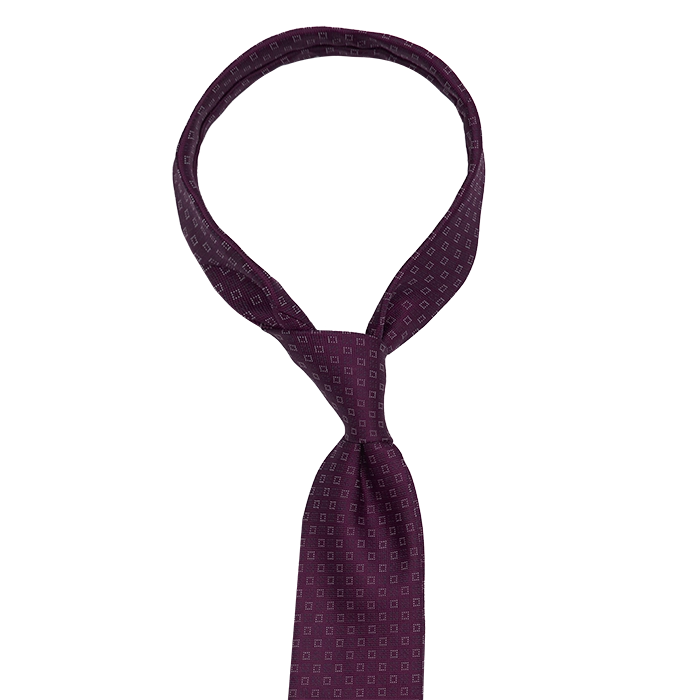
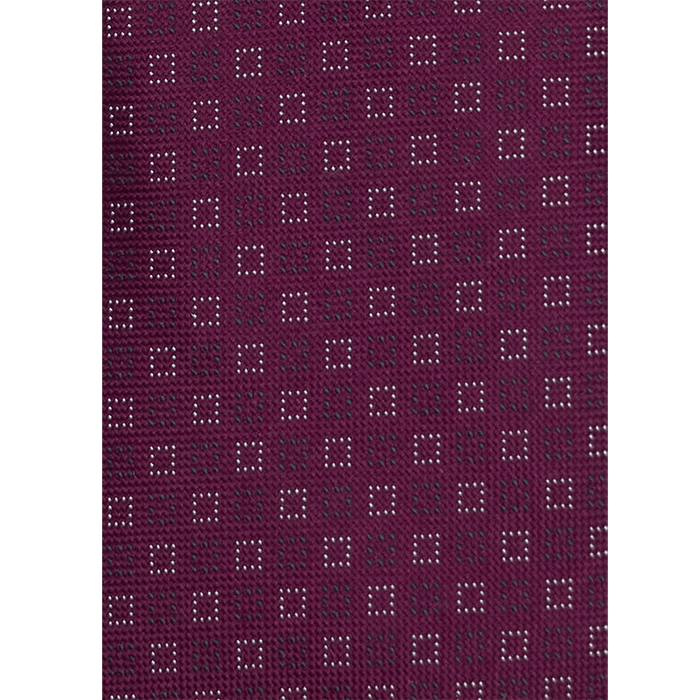
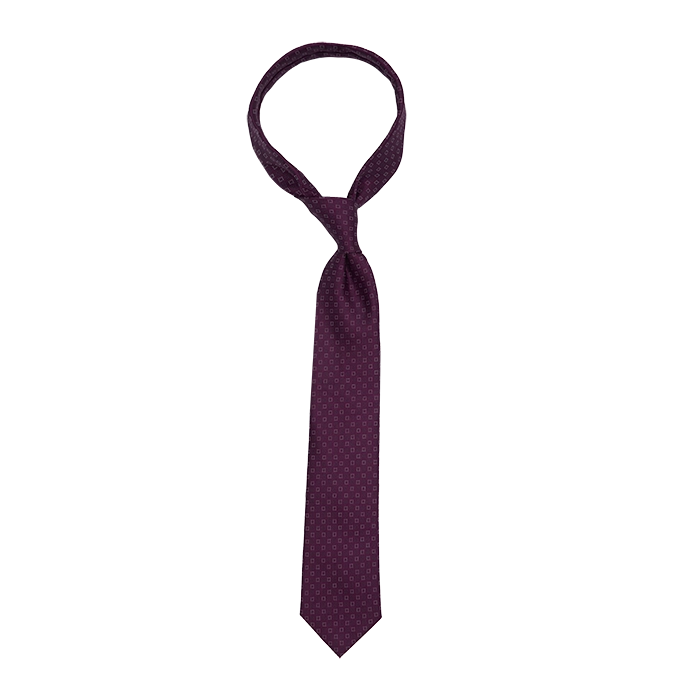
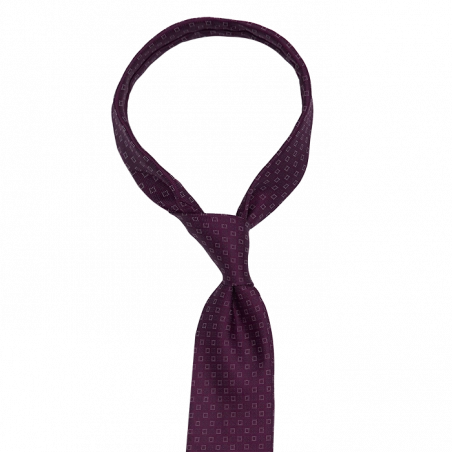
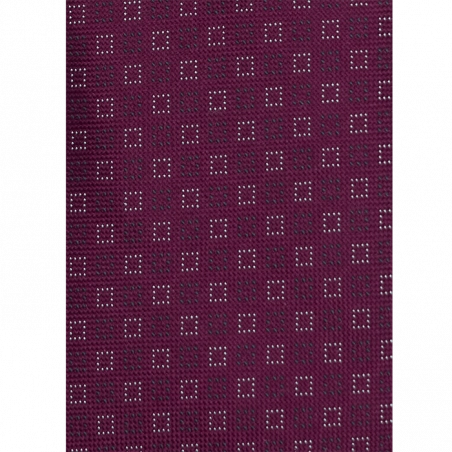
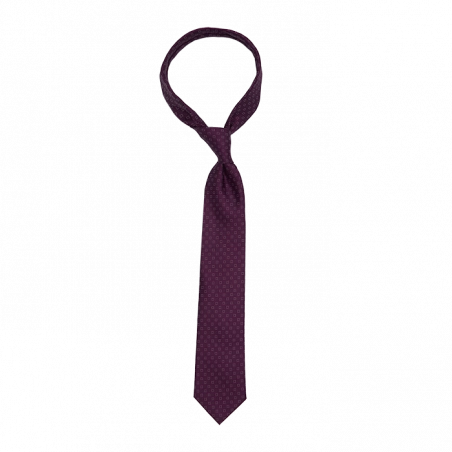
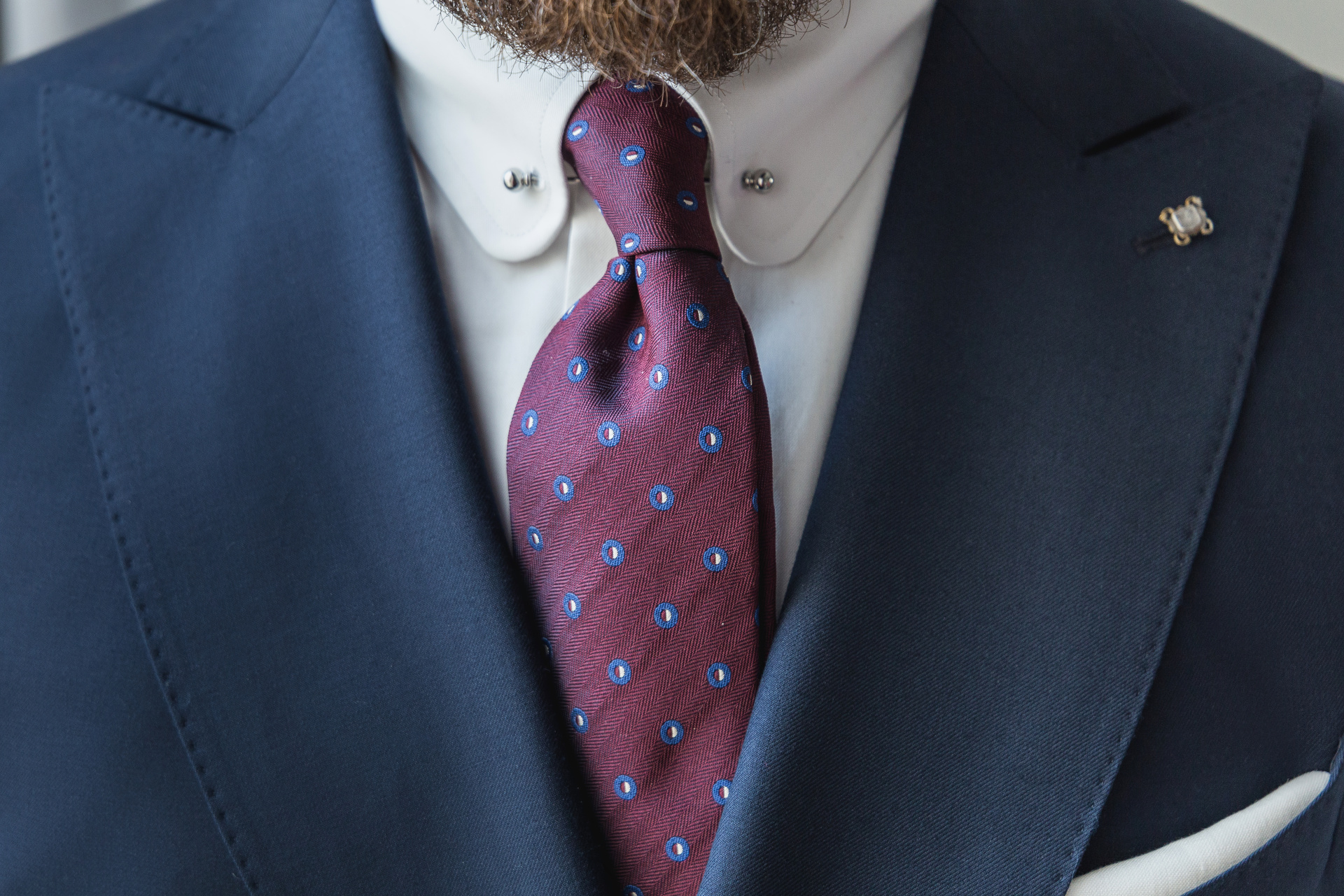
Burgundy tie with a micro pattern
A chic burgundy tie with a micro pattern, made from 100% silk. Elegant and distinctive, it’s a perfect accessory for a wide range of outfits — from formal ensembles to more casual looks.
Learn more about ties:
The tie is undoubtedly one of the most important and essential elements of a man’s wardrobe in the world of classic elegance. Choosing the right tie for a given outfit clearly reflects the wearer’s level of sartorial knowledge and helps avoid committing a faux pas.
.jpg)
.jpg)
.jpg)
.jpg)
A touch of history
The first ties were worn by Croatians as early as the 17th century. When Croatian mercenaries brought them to Western Europe, it marked the beginning of the long and gradual evolution of the tie into its modern form. Ties resembling what we know today appeared in the early 20th century. At that time, they were considerably shorter than modern ties, as pants were worn higher at the natural waist (just below the ribs), allowing shorter ties to reach the waistband easily. Ties were also much wider back then, often measuring 13–14 cm, which could evoke associations with a bib. In the 1950s, Esquire magazine popularized a new image of the modern man, featuring significantly narrower ties (which also led to slimmer lapels on jackets and narrower hat brims). During this period, ties became longer, with widths ranging from 3–8 cm. Since then, we have seen alternating trends of wider and slimmer ties roughly every decade. A few years ago, there was a craze for ultra-skinny ties, while today, men’s ties typically range between 7–9 cm in width.
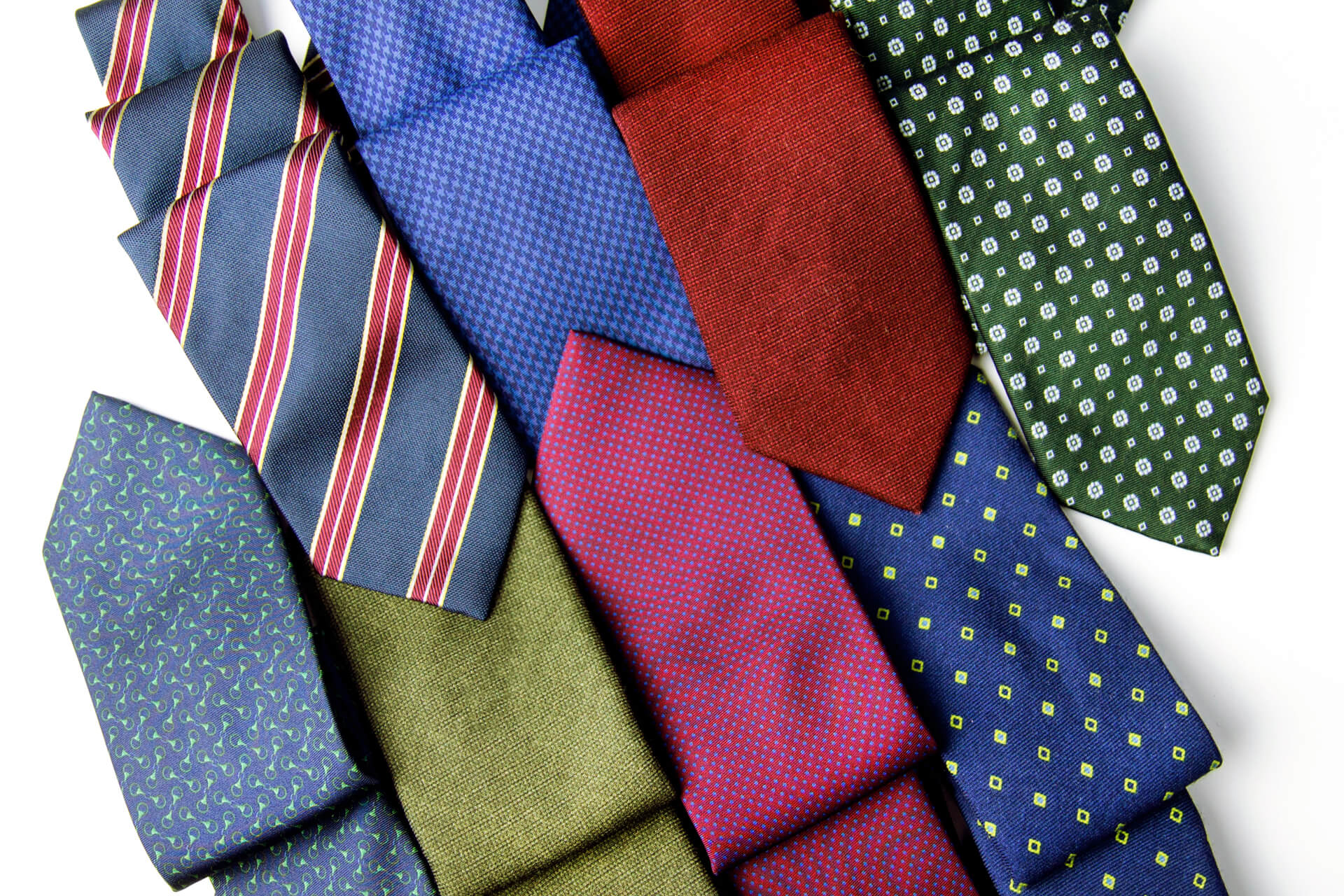
What are ties made of?
Every true gentleman will tell you that a tie should be made of silk. And that’s essentially true. The vast majority of ties available on the market are silk ties or ones designed to imitate them. They come in countless colors and textures, making silk ties suitable for most occasions where going without one would be inappropriate.
.jpg)
.jpg)
.jpg)
.jpg)
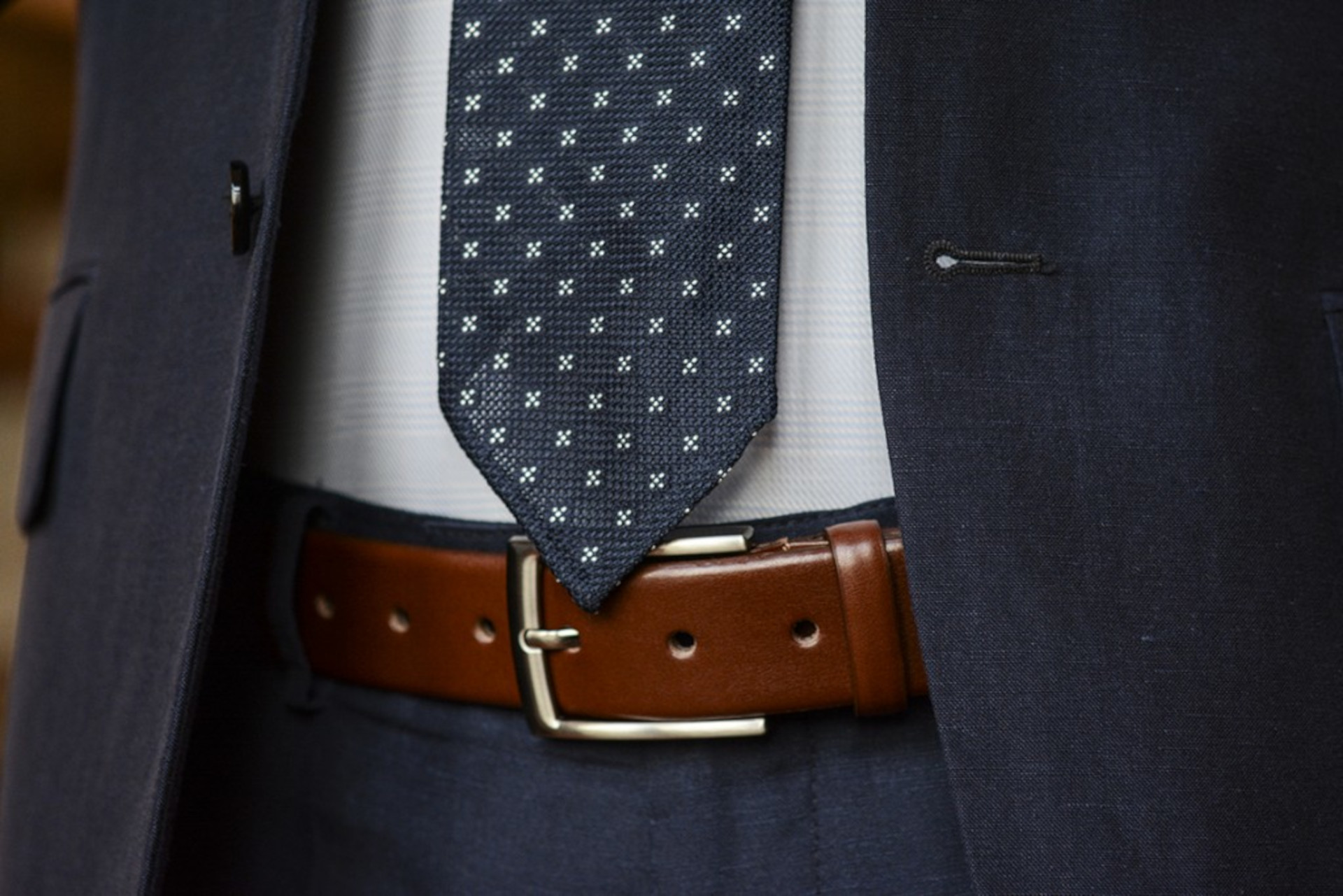
However, it’s hard not to notice that shiny silk rarely works well in casual outfits. If you want to wear a tie in a more relaxed, effortless way, consider investing in wool ties, which have a completely different texture than silk ties, or knitted ties (pronounced “nit”), which, although often made of silk as well, have the most informal character of all tie types due to their distinctive weave. These are worth considering when you want to dive into the world of sporty elegance.
Tie construction
Although a tie may seem to some like nothing more than a simple piece of fabric, its construction is very important and, contrary to appearances, quite complex. Few people delve into its many intricacies! For experienced tie enthusiasts, one touch is enough to know how a knot will form with a particular tie. Inside the tie is a canvas interlining (at least in most quality ties), and its thickness and elasticity determine the shape of the knot. Ties without proper interlining tend to form very small knots or ones that are difficult to shape. This is crucial because the knot’s shape is one of the most important factors influencing a tie’s appeal. That’s precisely why buying cheap imitation ties makes no sense. Both ends of the tie are “finished” with what’s known as tipping. In lower-quality ties, the tipping is made of viscose, while in higher-quality ties, it is made from the same fabric as the tie itself. A good tie should also feature a sewn-in keeper loop (not the label, which should ideally be removed after purchase) that tucks inside the tie and holds the narrower end in place. Below are examples of ties finished with tipping:
.jpg)
.jpg)
.jpg)
.jpg)
The anatomy of a tie is explained in detail in the video below:

How to tie a tie?
It’s a sad fact that in Poland the most commonly worn knot is the symmetrical “double Windsor.” This comes with several stylistic issues. Most importantly, it doesn’t look good with many types of shirt collars. An even bigger problem is that tying a double Windsor “consumes” so much of the tie’s length that many men end up unable to achieve the proper tie length or (arguably worse) wear a knot under their chin the size of a tennis ball. There are dozens of knots to choose from depending on face shape, collar style, and the type and thickness of the tie. It’s best to start practicing with the simplest one, called the four-in-hand. Learn more in the video below:

The four-in-hand is without a doubt the most versatile and one of the most elegant knots. It’s important to remember that tying a beautiful knot is a kind of art that requires practice and skill. Mastering even such a simple knot isn’t something you can expect to achieve in a single evening in front of a computer screen.
A well-tied tie should have several key characteristics:
- Always snug – the top button of the shirt should never be visible
- Properly tightened – in a way that creates a beautiful contour, giving the knot dynamism
- If the style of the tie allows, it can feature a dimple – a small “tear drop” below the knot that adds a touch of finesse
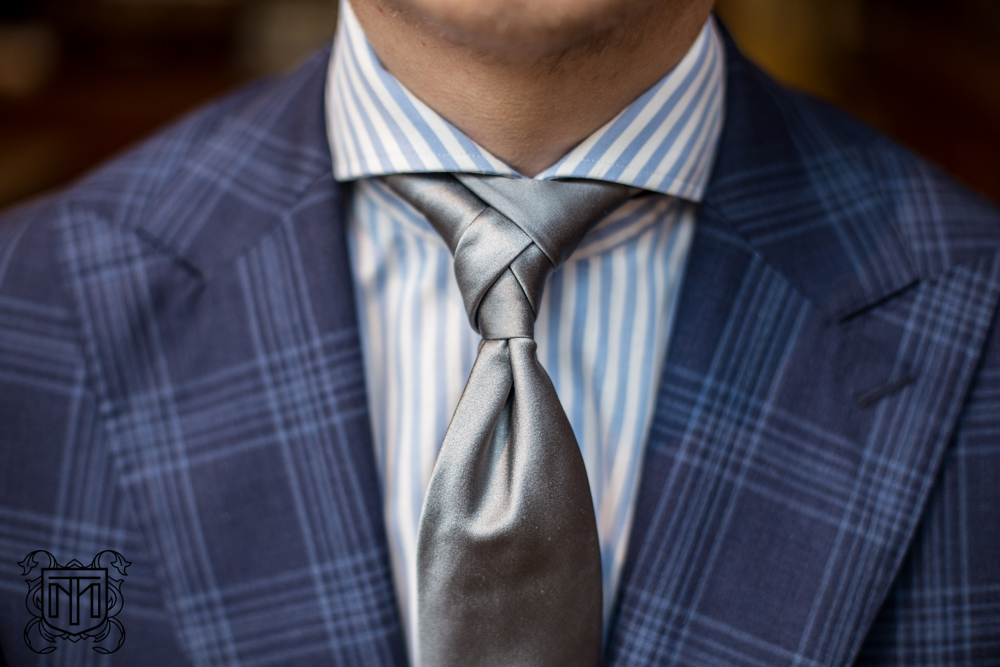
There are many “knot theory” enthusiasts who can wax lyrical about the superiority of their favorite knot over the one you happen to be wearing today. However, it’s worth remembering that overcomplicating things (i.e., each additional wrap of the tie in the knot) moves you further away from elegance rather than closer to it. The choice of knot structure should depend on the relationship between the tie’s properties and the desired knot volume. Keep in mind that “rarities” like the one in the photo below, while tempting for beginners in the art of elegance, have very little in common with true sophistication.
And when wearing a tie in the textbook way starts to feel a little dull, you can consider other stylistic touches – such as using a tie pin, clip, or bar; pulling the back blade out from behind the front blade; or tying the knot so that the front blade is shorter than the back. There are countless possibilities, and as long as you experiment with them consciously, the only limit should be your imagination. The rules of classic elegance aren’t set in stone; they are meant to guide your development. History is made by men who know how to break them.
Color
It’s important to emphasize that the color and pattern of a tie are strongly influenced by the formality of the occasion for which you plan to wear it. Unfortunately, many men don’t realize that a tie which looks stunning on the shelf may not appear equally impressive when worn around their neck. Much depends on the contrast of the wearer’s face and the colors of the shirt and suit.
.jpg)
.jpg)
.jpg)

Trusted by 1,589 customers (4.6/5 on Google) • 110K Facebook • 36K Instagram • Ships from the EU (Poland) • 14-day returns
Trusted by 1,589 customers (4.6/5 on Google) • 110K Facebook • 36K Instagram • Ships from the EU (Poland) • 14-day returns